← Fame through time1920-1929
The 1920s
Whose names filled the books of the 1920s - anyone at all, however long dead - counted as mentions per million words printed, so a period that simply published more does not inflate anyone.
Talked about then
Whose names appeared most in French books during the 1920s, whenever they lived.
- 1
 Voltaire22
- 2
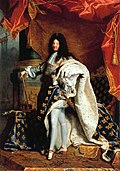 Louis XIV of France19
- 3
 Molière17
- 4
 Victor Hugo12
- 5
 Stendhal11
- 6
 Louis XVI of France8.4
- 7
 Louis XV of France7.8
- 8
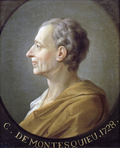 Montesquieu5.5
- 9
 François Fénelon5.1
- 10
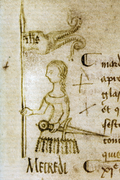 Joan of Arc5.0
- 11
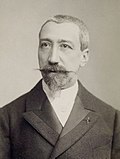 Anatole France4.9
- 12
 George Sand4.0
- 13
 Napoleon III3.9
- 14
 Louis XVIII of France3.8
- 15
 Charles Marie René Leconte de Lisle3.1
- 16
 Francis de Sales2.9
- 17
 Marie Antoinette2.3
- 18
 Auguste Comte2.3
- 19
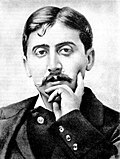 Marcel Proust2.3
- 20
 Charles X of France2.1
- 21
 Paul Bourget2.1
- 22
 Théophile Gautier1.9
- 23
 Vincent de Paul1.9
- 24
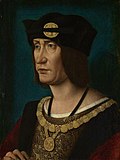 Louis XII of France1.9
- 25
 Claude Bernard1.6
Lived then
The most notable people whose working lives fell in the 1920s, ranked where coverage and readership agree.
- 1
 Adolf Hitler10 decades
- 2
 Mao Zedong13 decades
- 3
 Charlie Chaplin11 decades
- 4
 Dwight D. Eisenhower9 decades
- 5
 J. R. R. Tolkien7 decades
- 6
 Charles de Gaulle9 decades
- 7
 Agatha Christie10 decades
- 8
 Nikita Khrushchev10 decades
- 9
 Hermann Göring9 decades
- 10
 Chiang Kai-shek4 decades
- 11
 Francisco Franco9 decades
- 12
 Edward VIII9 decades
- 13
 Jawaharlal Nehru10 decades
- 14
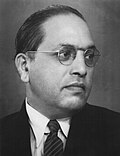 B. R. Ambedkar8 decades
- 15
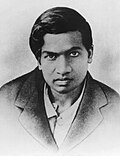 Srinivasa Ramanujan0 decades
- 16
 Ho Chi Minh8 decades
- 17
 Erwin Rommel8 decades
- 18
 Josip Broz Tito8 decades
- 19
 H. P. Lovecraft6 decades
- 20
 Haile Selassie0 decades
- 21
 Sergei Yesenin11 decades
- 22
 Rudolf Hess9 decades
- 23
 George S. Patton8 decades
- 24
 David Ben-Gurionnot measured-
- 25
 Karl Dönitz8 decades
How to read these rankings
- Attention, not reputation. A place on these lists reflects the attention a person still draws in the public record. It is not a judgement on the life.
- Fame in print. The curves show how often a name appeared in the books of each decade from 1800 to 2019, drawn from the Google Books Ngram corpus.
- Gaps are left as gaps. Where the record is too thin to be fair, we would rather show nothing than guess.