← Fame through time1800-1899
The 19th century
Whose names filled the books of the 19th century - anyone at all, however long dead - counted as mentions per million words printed, so a period that simply published more does not inflate anyone.
Talked about then
Whose names appeared most in English books during the 19th century, whenever they lived.
- 1
 Jesus94
- 2
 Homer15
- 3
 Cicero13
- 4
 Augustus13
- 5
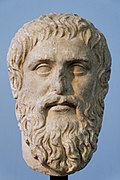 Plato10
- 6
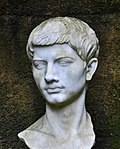 Virgil9.6
- 7
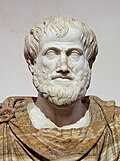 Aristotle9.4
- 8
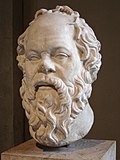 Socrates6.4
- 9
 Herodotus6.2
- 10
 Plutarch5.6
- 11
 Ovid4.2
- 12
 Strabo4.1
- 13
 Charlemagne3.9
- 14
 Demosthenes3.8
- 15
 Lord Byron3.6
- 16
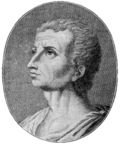 Livy3.4
- 17
 Origen3.1
- 18
 Cleopatra3.0
- 19
 Xenophon3.0
- 20
 Walter Scott3.0
- 21
 Tertullian2.7
- 22
 James II, Count of Urgell2.6
- 23
 Robert Peel2.6
- 24
 Henry VII, Holy Roman Emperor2.6
- 25
 Pericles2.5
Lived then
The most notable people whose working lives fell in the 19th century, ranked where coverage and readership agree.
- 1
 Karl Marx17 decades
- 2
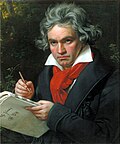 Ludwig van Beethoven21 decades
- 3
 Friedrich Nietzsche15 decades
- 4
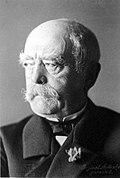 Otto von Bismarck16 decades
- 5
 Richard Wagner19 decades
- 6
 Georg Wilhelm Friedrich Hegel21 decades
- 7
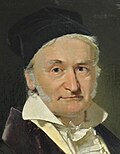 Carl Friedrich Gauss11 decades
- 8
 Wilhelm II, German Emperornot measured-
- 9
 Paul von Hindenburg10 decades
- 10
 Max Weber15 decades
- 11
 Max Planck14 decades
- 12
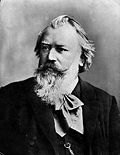 Johannes Brahms17 decades
- 13
 Empress Elisabeth of Austria0 decades
- 14
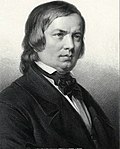 Robert Schumann19 decades
- 15
 Wilhelm Röntgen11 decades
- 16
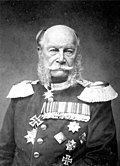 William I, German Emperornot measured-
- 17
 Carl von Clausewitz12 decades
- 18
 David Hilbert14 decades
- 19
 Richard Strauss13 decades
- 20
 Ludwig II of Bavarianot measured-
- 21
 Frederick III, German Emperornot measured-
- 22
 Robert Koch14 decades
- 23
 Klemens von Metternich0 decades
- 24
 Leopold I of Belgiumnot measured-
- 25
 E. T. A. Hoffmann21 decades
How to read these rankings
- Attention, not reputation. A place on these lists reflects the attention a person still draws in the public record. It is not a judgement on the life.
- Fame in print. The curves show how often a name appeared in the books of each decade from 1800 to 2019, drawn from the Google Books Ngram corpus.
- Gaps are left as gaps. Where the record is too thin to be fair, we would rather show nothing than guess.