David Hilbert is read about 1,095 times a day, in 135 languages.
A typical day, 30 days to 15 October 2026
The middle day of the days counted, so one week of news cannot move it. The line under it is the last 390 days, one point a day.
Something wrong?He handed the 20th century its mathematical to-do list. In 1900, Hilbert posed a set of problems that steered entire fields for decades - some solved, some still open, all seeded from a single mind that redrew the borders of rigor itself.
A life in dates
Also in Deutsch
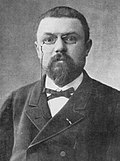
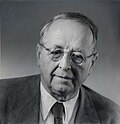
Photos 8


In their own words 10
 ,
, The art of doing mathematics consists in finding that special case which contains all the germs of generality.
One can measure the importance of a scientific work by the number of earlier publications rendered superfluous by it.
Mathematics knows no races or geographic boundaries; for mathematics, the cultural world is one country.
Awards
Family

Is this everyone?
Only relatives with a profile here are drawn, so a family can be larger than this. A line here can also be wrong.
Correct this familyAbout this person
Born in Prussia on 23 January 1862, Hilbert cut through invariant theory, algebraic number theory, and the foundations of geometry before he was forty. He defended Cantor's set theory when it was still suspect and co-founded proof theory, turning the question "what can we prove?" into a discipline. In 1900 he stood before the International Congress and delivered his collection of problems - a blueprint that occupied mathematicians for generations. His students and methods shaped modern mathematical physics, planting rigor where intuition had reigned. He died in Göttingen on 14 February 1943, after the world he'd helped build had already moved past him.



Fame.am measures public visibility signals. It does not measure human value, talent, morality, or credibility.