207,380 profiles ranked

Wilhelm II, German Emperor

As King of Prussia last German Emperor from 1888 to 1918 (1859-1941) · Germany · Historical Figures · Died at 82

Wilhelm II, German Emperor is read about 8,351 times a day, in 108 languages.

A typical day, 30 days to 15 October 2026

The middle day of the days counted, so one week of news cannot move it. The line under it is the last 390 days, one point a day.

Something wrong?
Compare

The Kaiser who crashed an empire. Wilhelm II dismissed Bismarck, built a fleet that spooked Britain, and blundered through diplomacy until Europe had no choice but war. By 1918 his generals ran Germany and he ran for the border.

A life in dates

1941Died4 June 19411918Grand Cross of the Order of the Cross of LibertyAward1906Grashof Commemorative MedalAward1904Knight of the GarterAward1902Royal Victorian ChainAward1900“I am not a man who believes that we Germans bled and conquered thirty years ago...in order to be pushed to one side when great international decisions call to be made.”In their words3 July 1900Speech at the launching of the battleship Wittelsbach (3 July 1900), quoted in Michael Balfour, The Kaiser and His Times (London: Penguin,

1898“Imagine a monarch, holding personal command of his army, disbanding his regiments, sacred with a hundred years of history - and handing his towns over to Anarchists and Democracy.”In their wordsAugust 1898Reaction to the Tsar's invitation (August 1898) to the Hague Conference of 1899, quoted in Robert K. Massie, Dreadnought: Britain, Germany

1895“There is a breed of men who do not deserve the name of Germans. I trust that the entire nation will find the strength to beat back their outrageous attacks.”In their words2 September 1895Speech (2 September 1895), quoted in Michael Balfour, The Kaiser and His Times (London: Penguin, 1975), p. 159

1893“I am just now not reading but devouring Captain Mahan's book and am trying to learn it by heart. It is a first-class book and classical on all points.”In their wordsLetter to an American friend (1893), quoted in John Rohl, Wilhelm II: The Kaiser's Personal Monarchy 1888-1900 (Cambridge: Cambridge

1891“There is only one person who is master in this Empire and I am not going to tolerate any other.”In their words4 May 1891Speech at Düsseldorf (4 May 1891), quoted in Michael Balfour, The Kaiser and His Times (London: Penguin, 1975), p. 157

1889“I regard every Social Democrat as an enemy of the Empire and Fatherland.”In their words14 May 1889Speech (14 May 1889), quoted in Michael Balfour, The Kaiser and His Times (London: Penguin, 1975), p. 159

Knight Grand Cross of the Military Order of WilliamAward1888German EmperorOffice1888-1918King of PrussiaOffice1888-19181884Grand Cordon of the Order of LeopoldAward1879Knight of the Order of the ElephantAward1876Knight Grand Cross in the Order of the Netherlands LionAward1859Born27 January 1859

Also in Deutsch

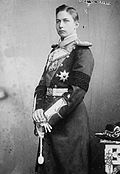
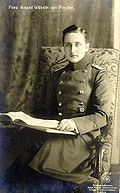
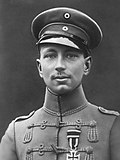
Photos 12

In their own words 10

,
Wilhelm II, German Emperor
,
10 statements, newest first
  1. I am not a man who believes that we Germans bled and conquered thirty years ago...in order to be pushed to one side when great international decisions call to be made.

    Jul 3, 1900, Speech at the launching of the battleship Wittelsbach (3 July 1900), quoted in Michael Balfour, The Kaiser and His Times (London: Penguin,, Own words

  2. The British navy is strong enough to defy any hostile combination; Germany has, practically speaking, no navy. I am therefore compelled to observe the strictest neutrality.

    Oct 29, 1899, Said to Bernhard von Bülow (29 October 1899), quoted in W. W. Coole (ed.), Thus Spake Germany (London: George Routledge & Sons, 1941), p., Own words

  3. The poor French...They have not read their Mahan!

    1898, On France's diplomatic retreat from war with Britain during the Fashoda Incident (1898), quoted in Paul Kennedy, The Rise and Fall of, Own words

Wikiquote, CC BY-SA 4.0

Awards

Grand Cross of the Order of the Cross of Liberty1918
Grashof Commemorative Medal1906
Knight of the Garter1904
Royal Victorian Chain1902
Knight Grand Cross of the Military Order of William1889
Grand Cordon of the Order of Leopold1884
Knight of the Order of the Elephant1879
Knight Grand Cross in the Order of the Netherlands Lion1876
Pour le Mérite
Knight of the Order of the Golden Fleece
Grand Cross of the Military Order of Maria Theresa
Order of the Black Eagle
Knight Grand Cross of the Order of St. Olav
Knight Grand Cross of the Order of Saints Maurice and Lazarus
Knight grand cross of the order of the crown of Italy
Order of St. Andrew
Grand Cross of the Iron Cross
Order of the Crown
Royal House Order of Hohenzollern
Order of Saint Hubert
Military Order of Max Joseph
Military Order of St. Henry
Hanseatic Cross
Sovereign Military Order of Malta
Knight of the Order of the Most Holy Annunciation
Order of Saints Cyril and Methodius Equal-to-apostles
Order of the Norwegian Lion
Order of the Rue Crown
Royal Order of the Seraphim
Collar of the Supreme Order of the Chrysanthemum
Knight Grand Cross of the Royal Victorian Order
Order of Saint Stanislaus
Order of the Red Eagle
House Order of Hohenzollern
Order of the Golden Fleece
Order of Willem
Order of Glory
Order of the Chrysanthemum
Order of the Royal House of Chakri
Order of the Crown of Thailand

Family

Is this everyone?

Only relatives with a profile here are drawn, so a family can be larger than this. A line here can also be wrong.

Correct this family

About this person

Wilhelm was born in 1859, eldest grandchild of Queen Victoria through his mother and heir to the Prussian throne. In March 1888 his father Frederick III became emperor, then died 99 days later, leaving the crown to a 29-year-old Wilhelm. He fired Otto von Bismarck in 1890 and steered a "New Course" meant to make Germany the leading power - expanding into China and the Pacific, outproducing the rest of Europe in manufacturing. But he alienated nearly every rival: the naval arms race with Britain, the crises over Morocco and Bosnia, the Berlin-to-Baghdad railway. By 1914 only Austria-Hungary and the dying Ottoman Empire stood with him. The July Crisis became his guarantee of military support to Vienna, and Europe tipped into World War I. Wilhelm delegated war decisions to the Supreme Army Command, which by 1916 effectively ruled in his place. Germany won in the east, lost in the west, and by autumn 1918 the military withdrew its support. He abdicated during the revolution of 1918-1919, fled to the Netherlands, and died there under Nazi occupation in 1941.

Country
Germany
Category
Historical Figures
Type
Historical Figure
Status
deceased
Dates
Lived 1859 to 1941 · aged 82

Fame.am measures public visibility signals. It does not measure human value, talent, morality, or credibility.