← Fame through time1940-1949
The 1940s
Whose names filled the books of the 1940s - anyone at all, however long dead - counted as mentions per million words printed, so a period that simply published more does not inflate anyone.
Talked about then
Whose names appeared most in German books during the 1940s, whenever they lived.
- 1
 Novalis6.8
- 2
 Adolf Hitler6.1
- 3
 Thomas Mann5.7
- 4
 Paracelsus5.6
- 5
 Jean Paul4.2
- 6
 Maria Theresa2.8
- 7
 Karl Marx2.5
- 8
 Gottfried Keller2.2
- 9
 Charles Augustus, Grand Duke of Saxe-Weimar-Eisenach2.1
- 10
 Richard Wagner2.1
- 11
Jacob Burckhardt2.0
- 12
 Gerhart Hauptmann1.9
- 13
 Rudolf Steiner1.8
- 14
 Friedrich Schlegel1.4
- 15
 William IV, Landgrave of Hesse-Kassel1.3
- 16
 Gustav Adolph, Duke of Mecklenburg-Güstrow1.3
- 17
 Max Weber1.3
- 18
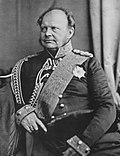 Frederick William IV of Prussia1.3
- 19
 Martin Luther1.2
- 20
 Hermann Göring1.2
- 21
 Hermann Hesse1.1
- 22
 Charles IV, Holy Roman Emperor1.1
- 23
 Adalbert Stifter1.1
- 24
 Stefan George1.1
- 25
 Hans Sachs1.0
Lived then
The most notable people whose working lives fell in the 1940s, ranked where coverage and readership agree.
- 1
 Ronald Reagan9 decades
- 2
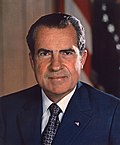 Richard Nixon8 decades
- 3
 Frida Kahlo8 decades
- 4
 Lyndon B. Johnson8 decades
- 5
 Alan Turing4 decades
- 6
 Gerald Ford6 decades
- 7
 Anne Frank7 decades
- 8
 Mother Teresa9 decades
- 9
 Leonid Brezhnev7 decades
- 10
 John Wayne9 decades
- 11
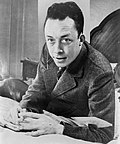 Albert Camus8 decades
- 12
 Pope John Paul I2 decades
- 13
 Katharine Hepburn9 decades
- 14
 Rosa Parks6 decades
- 15
 Ayn Rand3 decades
- 16
 James Stewartnot measured-
- 17
 Adolf Eichmann8 decades
- 18
 Hedy Lamarr3 decades
- 19
 Bette Davis9 decades
- 20
 Wernher von Braun7 decades
- 21
 Hannah Arendt8 decades
- 22
 Jean-Paul Sartre9 decades
- 23
 Ian Fleming7 decades
- 24
 Vivien Leigh8 decades
- 25
 Akira Kurosawa6 decades
How to read these rankings
- Attention, not reputation. A place on these lists reflects the attention a person still draws in the public record. It is not a judgement on the life.
- Fame in print. The curves show how often a name appeared in the books of each decade from 1800 to 2019, drawn from the Google Books Ngram corpus.
- Gaps are left as gaps. Where the record is too thin to be fair, we would rather show nothing than guess.