Hannah Arendt
German-American political theorist and philosopher (1906-1975) · United States · Academics · Died at 69
Hannah Arendt is read about 5,344 times a day, in 95 languages.
A typical day, 30 days to 15 October 2026
The middle day of the days counted, so one week of news cannot move it. The line under it is the last 390 days, one point a day.
Something wrong?She called it "the banality of evil" - the idea that ordinary people become cogs in totalitarian systems without grand malice, just obedience. That phrase, tied to her coverage of Adolf Eichmann's trial, made her one of the twentieth century's most influential political theorists and one of its most controversial.
A life in dates
Also in Deutsch
Photos 12


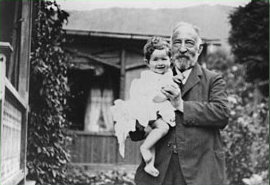


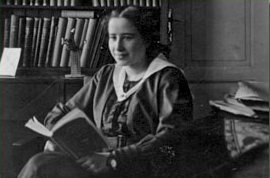

In their own words 10
 ,
, The law of progress holds that everything now must be better than what was there before. Don’t you see if you want something better, and better, and better, you lose the good?
In a head-on clash between violence and power, the outcome is hardly in doubt.
The most radical revolutionary will become a conservative the day after the revolution.
Awards
Family
Hannah ArendtPartners


Is this everyone?
Only relatives with a profile here are drawn, so a family can be larger than this. A line here can also be wrong.
Correct this familyAbout this person
Born to a Jewish family in Linden in 1906, Arendt lost her father at seven and grew up in a secular, politically progressive household. She studied under Martin Heidegger at Marburg - where they began a romantic affair - and earned her doctorate in philosophy at Heidelberg in 1929 under Karl Jaspers. In 1933 the Gestapo briefly imprisoned her for illegal research into antisemitism; she fled to Paris, worked helping young Jews emigrate to Palestine, then escaped a French detention camp when Germany invaded and reached the United States in 1941. The Origins of Totalitarianism in 1951 established her as a major thinker, followed by The Human Condition in 1958 and Eichmann in Jerusalem in 1963, the latter igniting debate over her attempt to explain how ordinary people serve atrocity. She taught at American universities, refused tenure-track posts, and died suddenly of a heart attack in 1975, leaving The Life of the Mind unfinished.
In common with Hannah



Academics from the United States 2


Fame.am measures public visibility signals. It does not measure human value, talent, morality, or credibility.