← Fame through time1930-1939
The 1930s
Whose names filled the books of the 1930s - anyone at all, however long dead - counted as mentions per million words printed, so a period that simply published more does not inflate anyone.
Talked about then
Whose names appeared most in Spanish books during the 1930s, whenever they lived.
- 1
 John of God7.7
- 2
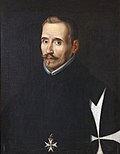 Lope de Vega7.7
- 3
 Francis Xavier5.2
- 4
 Simón Bolívar3.9
- 5
 Rubén Darío3.4
- 6
 Pedro de Alvarado3.3
- 7
 Christopher Columbus3.0
- 8
 Bartolomé Mitre3.0
- 9
 Hernán Cortés2.8
- 10
 Francisco Pizarro2.7
- 11Juan Fernández2.5
- 12
 Gonzalo Pizarro2.5
- 13
 Andrés Bello2.2
- 14
 José de San Martín2.0
- 15
 Porfirio Díaz1.9
- 16
 Juan Manuel de Rosas1.8
- 17
 Bernardino Rivadavia1.8
- 18
 Bartolomé de las Casas1.7
- 19
 Ricardo Palma1.7
- 20
 Teresa of Ávila1.6
- 21
 Roque Sáenz Peña1.6
- 22
 Florentino Ameghino1.6
- 23
 Garcilaso de la Vega1.6
- 24
 John of Austria1.6
- 25
 Diego de Almagro1.5
Lived then
The most notable people whose working lives fell in the 1930s, ranked where coverage and readership agree.
- 1
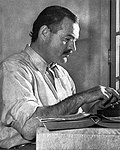 Ernest Hemingway10 decades
- 2
 Alfred Hitchcock9 decades
- 3
 Walt Disney10 decades
- 4
 J. Robert Oppenheimer8 decades
- 5
 Ruhollah Khomeini5 decades
- 6
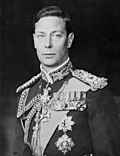 George VI10 decades
- 7
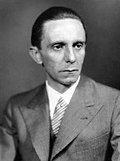 Joseph Goebbels9 decades
- 8
 George Orwell9 decades
- 9
 Heinrich Himmler9 decades
- 10
 Hirohito10 decades
- 11
 Deng Xiaoping11 decades
- 12
 Amelia Earhart10 decades
- 13
 Salvador Dalí10 decades
- 14
 Al Capone9 decades
- 15
 C. S. Lewis10 decades
- 16
 Cary Grant9 decades
- 17
 Marlene Dietrich9 decades
- 18
 Humphrey Bogart9 decades
- 19
 Georgy Zhukov6 decades
- 20
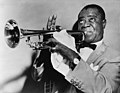 Louis Armstrong9 decades
- 21
 Pope Paul VI6 decades
- 22
 Bing Crosby9 decades
- 23
 Clark Gable9 decades
- 24
 Werner Heisenberg10 decades
- 25
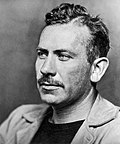 John Steinbeck9 decades
How to read these rankings
- Attention, not reputation. A place on these lists reflects the attention a person still draws in the public record. It is not a judgement on the life.
- Fame in print. The curves show how often a name appeared in the books of each decade from 1800 to 2019, drawn from the Google Books Ngram corpus.
- Gaps are left as gaps. Where the record is too thin to be fair, we would rather show nothing than guess.