← Fame through time1850-1859
The 1850s
Whose names filled the books of the 1850s - anyone at all, however long dead - counted as mentions per million words printed, so a period that simply published more does not inflate anyone.
Talked about then
Whose names appeared most in Italian books during the 1850s, whenever they lived.
- 1
 Giotto4.1
- 2
 Antonio da Correggio3.7
- 3
 Torquato Tasso3.2
- 4
 Pietro Perugino2.9
- 5
 Lorenzo de' Medici2.9
- 6
 Charles Borromeo2.8
- 7
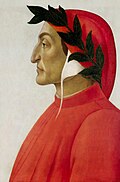 Dante Alighieri2.6
- 8
 Donato Bramante2.5
- 9
 Cesare Balbo2.2
- 10
 Caravaggio2.1
- 11
 Tintoretto2.0
- 12
 Ugo Foscolo1.9
- 13
 Philip Neri1.8
- 14
 Paul the Deacon1.8
- 15
 Giuseppe Mazzini1.8
- 16
 Vincenzo Gioberti1.8
- 17
 Andrea Doria1.7
- 18
 Cosimo de' Medici1.6
- 19
 Donatello1.5
- 20
 Leonardo da Vinci1.4
- 21
 Francesco Guicciardini1.4
- 22
 Marco Polo1.4
- 23
 Cesare Borgia1.4
- 24
 Silvio Pellico1.3
- 25
 Apostolo Zeno1.3
Lived then
The most notable people whose working lives fell in the 1850s, ranked where coverage and readership agree.
- 1
 Karl Marx17 decades
- 2
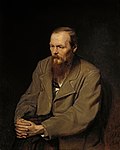 Fyodor Dostoevsky17 decades
- 3
 Queen Victorianot measured-
- 4
 Otto von Bismarck16 decades
- 5
 Ulysses S. Grant16 decades
- 6
 Florence Nightingale17 decades
- 7
 Louis Pasteur14 decades
- 8
 Ada Lovelace3 decades
- 9
 Rutherford B. Hayes16 decades
- 10
 Charlotte Brontë17 decades
- 11
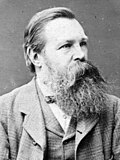 Friedrich Engels17 decades
- 12
 Henry David Thoreau13 decades
- 13
 Walt Whitman17 decades
- 14
 Alexander II of Russia17 decades
- 15
 Harriet Tubman9 decades
- 16
 Charles Baudelaire17 decades
- 17
 George Eliot19 decades
- 18
 Herman Melville18 decades
- 19
 Frederick Douglass18 decades
- 20
 Gregor Mendel12 decades
- 21
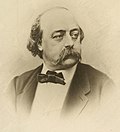 Gustave Flaubert17 decades
- 22
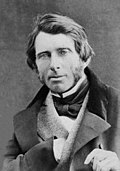 John Ruskin18 decades
- 23
 Susan B. Anthony16 decades
- 24
 Rani of Jhansi8 decades
- 25
 William Tecumseh Sherman14 decades
How to read these rankings
- Attention, not reputation. A place on these lists reflects the attention a person still draws in the public record. It is not a judgement on the life.
- Fame in print. The curves show how often a name appeared in the books of each decade from 1800 to 2019, drawn from the Google Books Ngram corpus.
- Gaps are left as gaps. Where the record is too thin to be fair, we would rather show nothing than guess.