Rani of Jhansi is read about 976 times a day, in 68 languages.
A typical day, 30 days to 15 October 2026
The middle day of the days counted, so one week of news cannot move it. The line under it is the last 390 days, one point a day.
Something wrong?She fought the British Empire on horseback with a sword, died in battle at a fort, and became the face of resistance - a 19th-century queen whose refusal to surrender Jhansi turned her into India's most potent symbol of defiance against colonial rule.
Also in Deutsch
Photos 8
 LAKSMIBAI, RANI OF JHANSI (22140388883)
 1957 Rani Laxmi Bai 2
 19th Century Imaginary Potrait of Rani Laxmi Bai Queen of Jhansi
 A ruler holding court. Gouache drawing. Wellcome V0045210
 Equestrian painting of Lakshmibai, the Rani of Jhansi, Central India, perhaps Jhansi, ca.1860
 Gangadhar Rao alias Babasaheb Newalkar
 Kalighat pictures sep sheets 17
 Lachmi Bai Rani of Jhansi - Frontispiece
In their own words 4
 ,
She inspires us till today and shall continue to inspire future generations till eternity.
[Rani Lakshmibai is] "personable, clever and beautiful"... "the most dangerous of all Indian leaders".
The British Raj in India has treated Savarkar’s book as most dangerous for their existence here. So it has been banned.
In their orbit
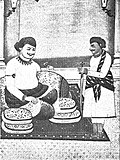 Spouse: Gangadhara Rao
About this person
Born Manikarnika Tambe into a Marathi family in Varanasi in the late 1820s or 1835, she married the raja of Jhansi young and took the name Rani Lakshmibai. When their son died and her husband adopted a relative on his deathbed in 1853, the British East India Company refused to recognise the succession and annexed Jhansi under the Doctrine of Lapse, ignoring her protests to Lord Dalhousie. After Indian troops mutinied and massacred the British in Jhansi in May 1857 - her role in the massacre contested then and now - she took command, recruited an army, and held off neighbouring states. The British decided to treat her as an enemy: Major General Hugh Rose besieged and captured Jhansi in March and April 1858. She escaped on horseback, joined other rebel leaders at Kalpi where Rose defeated them on 22 May, then fled to Gwalior Fort for a final stand. She died there in battle on 18 June 1858, and her legend, shaped by Hindu mythology, became the template for Indian nationalism - revered across the independence movement and in modern India, though Dalit communities view her differently.


Fame.am measures public visibility signals. It does not measure human value, talent, morality, or credibility.