Louis Pasteur
French chemist and microbiologist (1822-1895) · France · Scientists · Died at 72
Louis Pasteur is read about 3,769 times a day, in 171 languages.
A typical day, 30 days to 15 October 2026
The middle day of the days counted, so one week of news cannot move it. The line under it is the last 390 days, one point a day.
Something wrong?He's why you can drink milk without dying and why rabies isn't a death sentence. The chemist who killed spontaneous generation, proved germs cause disease, and turned vaccination from curiosity into medicine.
A life in dates
Also in Deutsch
Photos 8
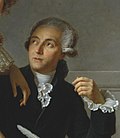
 Louis Pasteur (1822 - 1895), microbiologist and chemist Wellcome V0026980
 2021-12-24 15-13-43 - Melun - Hôtel de ville
 7 place Saint-Thomas
 800px -Experiment Pasteur English es
 A dog with rabies and a detail of its skull. Line engraving Wellcome V0010532
 Acte de naissance de Louis Pasteur AD39
 Apparatus used by Pasteur in experiments Wellcome M0013300
 Bacteria from Pasteur's Etudes sur la biere. Wellcome L0001875
In their own words 10
 ,
I beseech you to take interest in these sacred domains so expressively called laboratories.
There does not exist a category of science to which one can give the name applied science.
No, there is now no circumstance known in which it can be affirmed that microscopic beings came into the world without germs, without parents similar to themselves.
Awards
Family
 Louis Pasteur
Partners

Children


Is this everyone?
Only relatives with a profile here are drawn, so a family can be larger than this. A line here can also be wrong.
Correct this familyAbout this person
Louis Pasteur was a French chemist and microbiologist born 27 December 1822. Early work on sodium ammonium tartrate opened the field of optical isomerism, with implications that rippled through structural and medicinal chemistry. In 1862 the French Academy of Sciences awarded him the Alhumbert Prize for disproving spontaneous generation: sterilized sealed flasks stayed sterile, open ones grew microorganisms. That experiment fed his larger push for germ theory, then a minor idea, which his work on killing germs to prevent disease brought into clinical practice. He invented pasteurization to stop bacterial contamination in milk and wine, and developed vaccines for rabies and anthrax - credited with saving millions. He directed the Pasteur Institute from its founding in 1887 until his death on 28 September 1895, and was buried beneath it, though later review of his notebooks revealed he practiced deception to best his rivals.



Fame.am measures public visibility signals. It does not measure human value, talent, morality, or credibility.