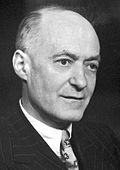
Paul Sabatier
French chemist (1854-1941) · France · Scientists · Died at 86
Paul Sabatier is read about 63 times a day, in 66 languages.
A typical day, 30 days to 15 September 2026
The middle day of the days counted, so one week of news cannot move it. The line under it is the last 360 days, one point a day.
Something wrong?A French chemist who cracked how to speed up hydrogenation using metal catalysts - work that reshaped organic chemistry and earned him the 1912 Nobel Prize.
A life in dates
Also in Deutsch
Photos 8

.jpg?width=1200)


.jpg?width=1200)
Awards
About this person
Born in Carcassonne on 5 November 1854, Sabatier built his career around a deceptively simple question: how to make hydrogen bond to organic molecules more efficiently. His breakthrough was showing that finely divided metals could催 the reaction, a method that became foundational for synthesizing everything from margarine to pharmaceuticals. The Nobel committee recognised him in 1912, sharing the prize with Victor Grignard. He spent the next three decades refining the science until his death on 14 August 1941, leaving behind a technique still in use whenever a chemist needs to add hydrogen to a molecule.


Fame.am measures public visibility signals. It does not measure human value, talent, morality, or credibility.