← Fame through time1900-1999
The 20th century
Whose names filled the books of the 20th century - anyone at all, however long dead - counted as mentions per million words printed, so a period that simply published more does not inflate anyone.
Talked about then
Whose names appeared most in Hebrew books during the 20th century, whenever they lived.
- 1
 Rav Ashi16
- 2
 Ahad Ha'am12
- 3
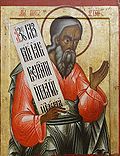 Haggai12
- 4
 Sabbatai Zevi8.2
- 5Saadia Gaon8.1
- 6
 Johanan ben Zakai5.5
- 7
 Josephus5.5
- 8
 Habakkuk5.3
- 9
 Hai Gaon4.8
- 10Simeon ben Gamliel II4.8
- 11
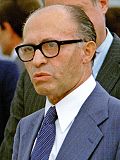 Menachem Begin4.4
- 12Nathan the Babylonian3.8
- 13
 Shimon Peres3.6
- 14
 Paul the Apostle3.3
- 15Samuel ibn Naghrillah3.2
- 16
 Moshe Dayan3.2
- 17Judah ben Samuel of Regensburg3.1
- 18
 Hillel the Elder3.1
- 19Simeon ben Zoma2.8
- 20
 Judas Maccabeus2.7
- 21
 Yitzhak Rabin2.7
- 22
 Golda Meir2.6
- 23Yanai2.5
- 24
 Moshe Sharett2.2
- 25
 Isaac Abrabanel2.1
Lived then
The most notable people whose working lives fell in the 20th century, ranked where coverage and readership agree.
- 1
 Yukio Mishima6 decades
- 2
 Haruki Murakami2 decades
- 3
 Shigeru Miyamoto0 decades
- 4
 Hiroo Onoda0 decades
- 5
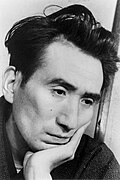 Osamu Dazai0 decades
- 6
 Ryūnosuke Akutagawa0 decades
- 7Shōkō Asaharanot measured-
- 8
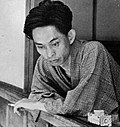 Yasunari Kawabata1 decades
- 9
 Ryū Murakaminot measured-
- 10
 Kenzaburō Ōe0 decades
- 11
 Natsume Sōseki0 decades
- 12
 Rumiko Takahashinot measured-
- 13
 Kōbō Abe0 decades
- 14
 Banana Yoshimotonot measured-
- 15
 Gosho Aoyamanot measured-
- 16
 Shūsaku Endōnot measured-
- 17
 Junji Itōnot measured-
- 18
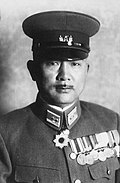 Tadamichi Kuribayashinot measured-
- 19
 Mas Oyamanot measured-
- 20
 Masaoka Shikinot measured-
- 21
 Kazuki Takahashinot measured-
- 22
 Jun'ichirō Tanizakinot measured-
- 23
 Edogawa Ranponot measured-
- 24Tsugumi Ohbanot measured-
- 25
 Daisaku Ikedanot measured-
How to read these rankings
- Attention, not reputation. A place on these lists reflects the attention a person still draws in the public record. It is not a judgement on the life.
- Fame in print. The curves show how often a name appeared in the books of each decade from 1800 to 2019, drawn from the Google Books Ngram corpus.
- Gaps are left as gaps. Where the record is too thin to be fair, we would rather show nothing than guess.