← Fame through time1840-1849
The 1840s
Whose names filled the books of the 1840s - anyone at all, however long dead - counted as mentions per million words printed, so a period that simply published more does not inflate anyone.
Talked about then
Whose names appeared most in Hebrew books during the 1840s, whenever they lived.
- 1
 Habakkuk15
- 2
 Haggai13
- 3Simeon ben Gamliel II12
- 4Nathan the Babylonian11
- 5
 Rav Ashi8.3
- 6
 Johanan ben Zakai5.0
- 7Joseph Caspi3.2
- 8
 Hillel the Elder3.0
- 9Saadia Gaon2.8
- 10Simeon ben Zoma2.5
- 11
 Hai Gaon2.0
- 12Hanina ben Dosa1.6
- 13
 Abraham bar Hiyya1.4
- 14Samuel ibn Naghrillah1.3
- 15
 Menasseh Ben Israel1.1
- 16Eliezer ben Hurcanus0.94
- 17
 Isaac Abrabanel0.87
- 18Joseph Kimhi0.85
- 19Judah ben Samuel of Regensburg0.66
- 20Eleazar ben Arach0.63
- 21
 Hayyim ben Joseph Vital0.57
- 22
 Moshe Alshich0.53
- 23Isaac ben Moses Arama0.48
- 24Joseph Albo0.46
- 25
 Chaim Joseph David Azulai0.46
Lived then
The most notable people whose working lives fell in the 1840s, ranked where coverage and readership agree.
- 1
 Abraham Lincoln22 decades
- 2
 Edgar Allan Poe17 decades
- 3
 Charles Dickens20 decades
- 4
 Charles Darwin21 decades
- 5
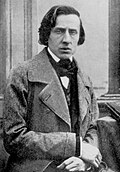 Frédéric Chopin16 decades
- 6
 Richard Wagner19 decades
- 7
 Hans Christian Andersen18 decades
- 8
 Andrew Johnson22 decades
- 9
 Nikolai Gogol19 decades
- 10
 Napoleon III21 decades
- 11
 Pope Leo XIII15 decades
- 12
 Søren Kierkegaard3 decades
- 13
 Emily Brontë14 decades
- 14
 Giuseppe Garibaldi11 decades
- 15
 Joseph Smith22 decades
- 16
 Mikhail Lermontov15 decades
- 17
 Robert E. Lee16 decades
- 18
 Giuseppe Verdi18 decades
- 19
 Franz Liszt19 decades
- 20
 John Stuart Mill18 decades
- 21
 Felix Mendelssohn18 decades
- 22
 P. T. Barnum17 decades
- 23
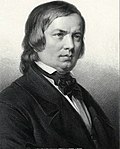 Robert Schumann19 decades
- 24
 Jefferson Davis20 decades
- 25
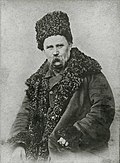 Taras Shevchenko13 decades
How to read these rankings
- Attention, not reputation. A place on these lists reflects the attention a person still draws in the public record. It is not a judgement on the life.
- Fame in print. The curves show how often a name appeared in the books of each decade from 1800 to 2019, drawn from the Google Books Ngram corpus.
- Gaps are left as gaps. Where the record is too thin to be fair, we would rather show nothing than guess.