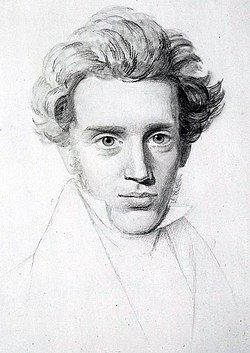
Søren Kierkegaard
Danish theologian, philosopher, poet and social critic (1813-1855) · Denmark · On the map · Academics · Died at 42
He wrote under fake names that argued with each other, buried philosophy in parables, and spent his short life dismantling the Danish state church from the inside. Kierkegaard's insistence that truth is subjective - that faith is a leap, not a proof - made him the first existentialist a century before the term existed.
Søren Kierkegaard is read about 3,541 times a day, in 116 languages.
A typical day, 30 days to 1 November 2026
The middle day of the days counted, so one week of news cannot move it. The line under it is the last 400 days, one point a day.
Something wrong?People around Søren
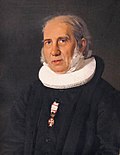
 Poul Martin Møller Taught Søren
 Hans Lassen Martensen Taught Søren
 Frederik Christian Sibbern Taught Søren
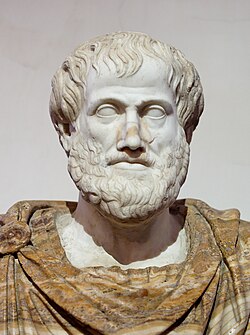 Aristotle Influenced Søren
 Martin Luther Influenced Søren
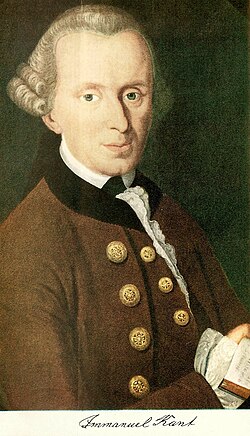 Immanuel Kant Influenced Søren
 Georg Wilhelm Friedrich Hegel Influenced Søren
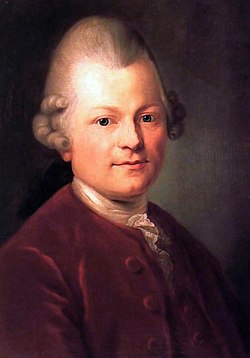 Gotthold Ephraim Lessing Influenced Søren
 Friedrich Wilhelm Joseph Schelling Influenced Søren
 Christian Wolff Influenced Søren
 Johann Georg Hamann Influenced Søren
 Jacob Peter Mynster Influenced Søren
 Albert Camus Influenced by Søren
 Ludwig Wittgenstein Influenced by Søren
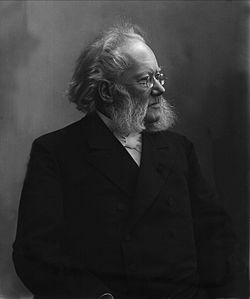 Henrik Ibsen Influenced by Søren
 Martin Heidegger Influenced by Søren
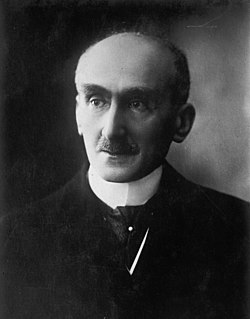 Henri Bergson Influenced by Søren
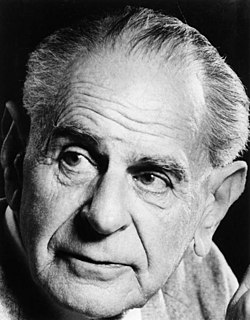 Karl Popper Influenced by Søren
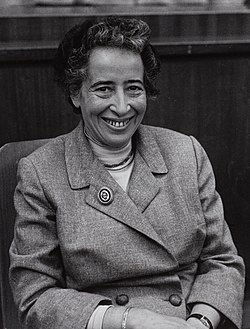 Hannah Arendt Influenced by Søren
 Erich Fromm Influenced by Søren
 Karl Jaspers Influenced by Søren
 W. H. Auden Influenced by Søren
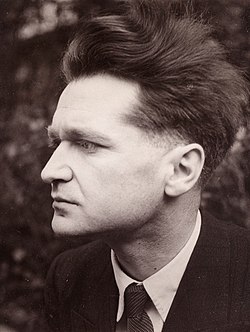 Emil Cioran Influenced by Søren
 Hans-Georg Gadamer Influenced by Søren


Is this everyone?
Only relatives with a profile here are drawn, so a family can be larger than this. A line here can also be wrong.
Correct this familyAlso in Deutsch
Media & music
Photos 8
 Søren Kierkegaard (1813-1855) - (cropped)
 1838 drawing of Kierkegaard
 Peter Christian Klæstrup - Søren Kierkegaard i en salon i København
 Wilhelm Marstrand - Tegning af Søren Kierkegaard
 Ane Sørensdatter Lund
 Christian Discourses 1848
 Christian Olavius Zeuthen - Søren Kierkegaard som café-gæst - 1843
 Concept of Anxiety
About this person
Born in Copenhagen in 1813, Søren Kierkegaard trained as a Lutheran theologian but turned his tools against the institution itself, attacking the Church of Denmark as a state-controlled apparatus that had strangled authentic faith. He wrote much of his early philosophical work pseudonymously, crafting multiple personae who debated across his books, while publishing devotional "Upbuilding Discourses" under his own name for what he called the "single individual." His core claim was radical for its time: becoming a Christian required subjective commitment, not objective proof, and the distance between man and God was infinite - bridgeable only by a passionate, personal leap. He explored angst, choice, and the stages of life's way, always prioritizing lived human reality over abstraction. Written in Danish, his work stayed regional until translations spread across Europe at the turn of the 20th century. By mid-century his ideas had reshaped existentialism, theology, and the way the West thought about selfhood. He died in Copenhagen in 1855, forty-two years old.