Immanuel Kant
German philosopher (1724-1804) · Academics · Died at 79
Immanuel Kant is read about 7,114 times a day, in 184 languages.
A typical day, 30 days to 18 October 2026
The middle day of the days counted, so one week of news cannot move it. The line under it is the last 393 days, one point a day.
Something wrong?The Prussian professor who reframed how humans know anything at all - arguing that space and time aren't out there in the world but structures our minds impose, and that morality binds through reason alone, not divine command.
A life in dates
Also in Deutsch
Photos 12


 Kant's house in Königsberg in an 1842 painting
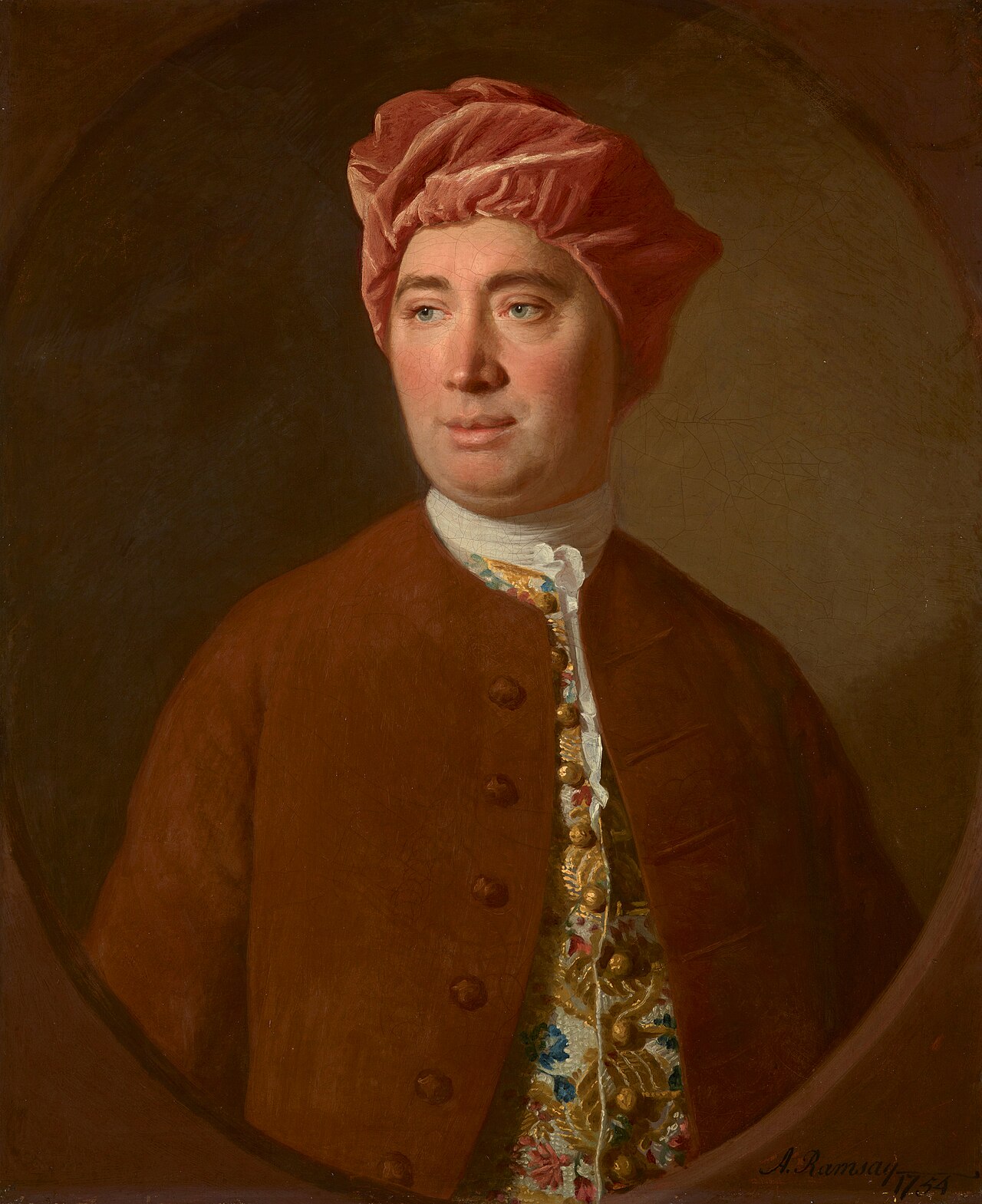 The philosopher David Hume by Allan Ramsay
 Portrait of Kant by Johann Christoph Frisch, after Johann Gottlieb Becker, c. 1770
 Kant with friends, including Christian Jakob Kraus, Johann Georg Hamann, Theodor Gottlieb von Hippel, and Karl Gottfried Hagen
 Kant's tomb in Kaliningrad, Russia
In their own words 10
 ,
, ...happiness is not an ideal of reason but of imagination, resting solely on empirical grounds.
Beneficence is a duty. He who often practices this, and sees his beneficent purpose succeed, comes at last really to love him whom he has benefited.
The wish to talk to God is absurd. We cannot talk to one we cannot comprehend - and we cannot comprehend God; we can only believe in Him.
Family
Parents
Immanuel KantIs this everyone?
Only relatives with a profile here are drawn, so a family can be larger than this. A line here can also be wrong.
Correct this familyAbout this person
Born in Königsberg in 1724, Kant spent his entire life in the same Prussian city, lecturing and writing. In 1781 he published the Critique of Pure Reason, proposing transcendental idealism: we experience only appearances shaped by our own mental categories, never things as they are in themselves. He called it a Copernican shift - objects conform to our intuition, not the reverse. From there he built a system spanning ethics (the categorical imperative binding all rational agents), aesthetics (judgment detached from desire), and politics (perpetual peace through a federation of republics). He died in 1804, leaving modern philosophy rebuilt around the human subject.


Fame.am measures public visibility signals. It does not measure human value, talent, morality, or credibility.