207,380 profiles ranked

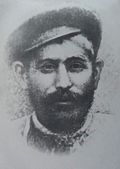
Joseph Stalin

Politician and leader of the Union of Soviet Socialist Republics from 1924 to 1953 · Russia · Politicians · Lived 1878 to 1953 · aged 74

Joseph Stalin is read about 20,759 times a day, in 208 languages.

A typical day, 30 days to 17 October 2026

The middle day of the days counted, so one week of news cannot move it. The line under it is the last 392 days, one point a day.

Something wrong?
Compare

He led the Soviet Union for nearly three decades, transformed it into an industrial superpower and defeated Nazi Germany - while presiding over terror, purges, forced labor camps, and famines that killed millions of his own citizens.

A life in dates

1998Human RemainsDocumentary about himJanuary 1998, 1998 short documentary film directed by Jay RosenblattIMDb1992StalinBiopic about his life21 November 1992, 1992 film directed by Ivan PasserIMDb1955Stalin MonumentTribute1 May 1955, sculpture in Prague, Czech Republic1953Died5 March 19531949Hero of the Mongolian People's RepublicAwardOrder of SukhbaatarAward1946Honorary Citizen of PragueAwardChairman of the Council of Ministers of the USSROffice1946-1953Minister of the Armed Forces of the Soviet UnionOffice1946-19471945Collar of the Order of the White LionAwardHero of the Soviet UnionAwardHonorary Citizen of ChrudimAwardMedal "For the Victory over Japan" of MongoliaAwardOrder of SukhbaatarAward1944Order of the Red BannerAward1943Czechoslovak War Cross 1939-1945AwardOrder of Suvorov, 1st classAward1941Chairman of the Council of People's CommissarsOffice1941-1946People's Commissar for DefenseOffice1941-19461940“To choose one's victims, to prepare one's plan minutely, to slake an implacable vengeance, and then to go to bed... There is nothing sweeter in the world.”In their wordsJoseph Stalin (c. 1940) Stalin's Kampf: Joseph Stalin's credo

1939“The State is a machine in the hands of the governing class for suppressing the resistance of its class antagonists.”In their wordsVoprosi Leninizma, Gosudarstvennoe izdatelstvo politicheskoy literaturi, (1939)

Time Person of the YearAward1938Deputy of the Supreme Soviet of the Soviet UnionOffice1938-19531936“It is difficult for me to imagine what "personal liberty" is enjoyed by an unemployed person, who goes about hungry, and cannot find employment.”In their words1 March 1936Interview Between J. Stalin and Roy Howard; March 1, 1936

“In my opinion there are two seats of war danger. The first is in the Far East, in the zone of Japan.”In their words1 March 1936Interview Between J. Stalin and Roy Howard; March 1, 1936

1934Secretary of the Communist Party of the Soviet UnionOffice1934-19531930Order of the Red BannerAward1924“Fascism is the bourgeoisie’s fighting organisation that relies on the active support of Social-Democracy. Social-Democracy is objectively the moderate wing of fascism.”In their wordsNovember 1924, Concerning the International Situation, 1. The Period of Bourgeois-Democratic “Pacifism”, 6 January-November, 1924

1922General Secretary of the Communist Party of the Soviet UnionOffice1922-19341919Order of the Red BannerAward1917Member of the Politburo of the CPSU Central CommitteeOffice1917-19531904“As we know, the goal of every struggle is victory. But if the proletariat is to achieve victory, all the workers, irrespective of nationality, must be united.”In their wordsfrom "The Social-Democratic View of the National Question", 1904 (aged 26)

1878Born18 December 1878

Also in Deutsch

Photos 12

In their own words 10

,
Joseph Stalin
,
10 statements, newest first
  1. To choose one's victims, to prepare one's plan minutely, to slake an implacable vengeance, and then to go to bed... There is nothing sweeter in the world.

    1940, Joseph Stalin (c. 1940) Stalin's Kampf: Joseph Stalin's credo, Own words

  2. It is impossible to finish off capitalism without having finished off social democracy in the working-class movement.

    1939, Voprosi Leninizma, Gosudarstvennoe izdatelstvo politicheskoy literaturi, (1939), Own words

  3. The State is a machine in the hands of the governing class for suppressing the resistance of its class antagonists.

    1939, Voprosi Leninizma, Gosudarstvennoe izdatelstvo politicheskoy literaturi, (1939), Own words

Wikiquote, CC BY-SA 4.0

Awards

Order of Lenin1949
Order of Sukhbaatar1949
Hero of the Mongolian People's Republic1949
Honorary Citizen of Budapest1948
Medal "In Commemoration of the 800th Anniversary of Moscow"1947
Honorary Citizen of Prague1946
Order of Lenin1945
Order of Sukhbaatar1945
Hero of the Soviet Union1945
Order of Victory1945
Medal "For the Victory over Germany in the Great Patriotic War 1941-1945"1945
Medal "For the Victory over Japan"1945
Czechoslovak War Cross 1939-19451945
Collar of the Order of the White Lion1945
Medal "For the Victory over Japan" of Mongolia1945
Honorary Citizen of České Budějovice1945
Honorary Citizen of Chrudim1945
Order of Victory1944
Order of the Red Banner1944
Medal "For the Defence of Moscow"1944
Czechoslovak War Cross 1939-19451943
Order of Suvorov, 1st class1943
Jubilee Medal "XX Years of the Workers' and Peasants' Red Army"1943
Order of the Republic1943
Time Person of the Year1942
Order of Lenin1939
Time Person of the Year1939
Hero of Socialist Labour1939
Order of the Red Banner1930
Order of the Red Star1922
Order of the Red Banner1919
Order of the Red Banner
Jubilee Medal "30 Years of the Soviet Army and Navy"

Family

Is this everyone?

Only relatives with a profile here are drawn, so a family can be larger than this. A line here can also be wrong.

Correct this family

About this person

Born to a poor Georgian family in Gori in 1878, Stalin attended seminary before joining the Marxist underground, financing Lenin's Bolsheviks through bank robberies and enduring repeated arrests and Siberian exile. After the Bolsheviks seized power in 1917, he used his role as General Secretary from 1922 to control the party bureaucracy, then won the leadership struggle after Lenin's death in 1924, sidelining rivals like Trotsky. His five-year plans beginning in 1928 forced agricultural collectivization and rapid industrialization, contributing to the 1932-1933 famine that killed millions, including the Holodomor in Ukraine; between 1936 and 1938 he executed hundreds of thousands in the Great Purge, and over eighteen million passed through the Gulag. He signed the Molotov-Ribbentrop Pact with Germany in 1939, enabling the Soviet invasion of Poland, then joined the Allies after Germany invaded in 1941, leading the Red Army to Berlin and emerging as a Cold War superpower. He presided over post-war reconstruction and the first Soviet atomic bomb test in 1949, then died after a stroke in 1953.

Country
Russia
Category
Politicians
Type
Politician
Status
deceased
Dates
Lived 1878 to 1953 · aged 74

Fame.am measures public visibility signals. It does not measure human value, talent, morality, or credibility.