Czesław Miłosz
Polish-American poet and Nobel laureate (1911-2004) · United States · On the map · Writers · Died at 93
He lived through the Nazi occupation of Warsaw, then worked for the communist government before defecting when they turned on him - and from exile wrote the poetry and prose that made him a Nobel laureate and the century's most unsparing witness to ideology's cost.
Czesław Miłosz is read about 674 times a day, in 101 languages.
A typical day, 30 days to 1 November 2026
The middle day of the days counted, so one week of news cannot move it. The line under it is the last 400 days, one point a day.
Something wrong?A life in dates
People around Czesław
 Fyodor Dostoevsky Influenced Czesław
 Augustine of Hippo Influenced Czesław
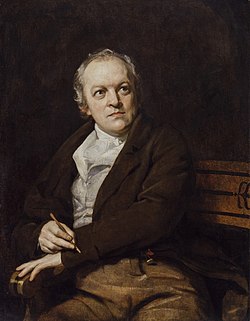 William Blake Influenced Czesław
 T. S. Eliot Influenced Czesław
 Martin Heidegger Influenced Czesław
 Heraclitus Influenced Czesław
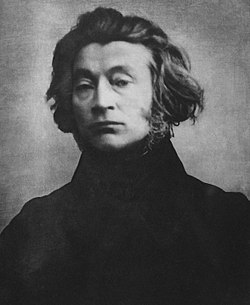 Adam Mickiewicz Influenced Czesław
 Simone Weil Influenced Czesław
Emanuel Swedenborg Influenced Czesław
 Jacques Maritain Influenced Czesław
 Lev Shestov Influenced Czesław
 Oscar Milosz Influenced Czesław
 Seamus Heaney Influenced by Czesław
 Derek Walcott Influenced by Czesław
 Ted Hughes Influenced by Czesław
 Charles Simic Influenced by Czesław
 Tadeusz Konwicki Directed The Issa Valley (1982)
 Mark Strand Influenced by Czesław
 Robert Pinsky Influenced by Czesław
 Mary Karr Influenced by Czesław
 Carolyn Forché Influenced by Czesław
- Richard Lourie Influenced by Czesław
 Rosanna Warren Influenced by Czesław
Partners
Children


Is this everyone?
Only relatives with a profile here are drawn, so a family can be larger than this. A line here can also be wrong.
Correct this familyAlso in Deutsch
Media & music
Photos 8
 Andrzej Milosz and Czeslaw Milosz
 Bielsko-Biała, Książnica Beskidzka, mural z noblistami - Tokarczuk, Miłosz, Szymborska
 Chodnik-memoriał Czesława Miłosza
 Co było wielkie by Czesław Miłosz, the wall of a school in Sofia, Bulgaria
 Czeslaw Milosz, Polish poet and winner of the Nobel Prize for Poetry 1980
 Czeslaw Milosz
 Czesław Miłosz 1986 (2)
 Czesław Miłosz 1986 (alt)
In their own words 4
And if there is no lining to the world? If a thrush on a branch is not a sign, But just a thrush on the branch? If night and day Make no sense following each other?
It would be more decorous not to live. To live is not decorous, Says he who after many years Returned to the city of his youth.
Every poet depends upon generations who wrote in his native tongue; he inherits styles and forms elaborated by those who lived before him.
Awards
About this person
Czesław Miłosz was born in Poland on 30 June 1911 and spent the war years surviving the German occupation of Warsaw. After 1945 he became a cultural attaché for Poland's new communist government, but when the authorities began threatening his safety, he defected to France and then settled in the United States, teaching at Berkeley. His wartime poetry and The Captive Mind, a prose dissection of Stalinism, established him as a major émigré voice. The Swedish Academy awarded him the Nobel Prize in Literature in 1980, citing a writer who "voices man's exposed condition in a world of severe conflicts". He spent decades translating Western literature into Polish and pressing the West to pay attention to Slavic writers, while his own work circled questions of faith, morality, and history. He died in Kraków on 14 August 2004 and was buried at Skałka, a church reserved for Poland's most honored dead.
Where to find them
In common with Czesław
 Ewa WiśniewskaAlso in The Issa Valley (1982)
 Octavio PazBoth received Neustadt International Prize for Literature
 Tomas TranströmerBoth received Neustadt International Prize for Literature
 Gabriel García MárquezBoth received Neustadt International Prize for Literature
 Danuta SzaflarskaAlso in The Issa Valley (1982)