Tomas Tranströmer
Swedish poet, psychologist and translator (1931-2015) · Sweden · Writers · Died at 83
Tomas Tranströmer is read about 196 times a day, in 97 languages.
A typical day, 30 days to 15 October 2026
The middle day of the days counted, so one week of news cannot move it. The line under it is the last 390 days, one point a day.
Something wrong?A Swedish poet who made winter feel like a metaphysical event. Tranströmer wrote spare, crystalline verse about seasons and silence that translated so cleanly it reached readers in over 60 languages - and won him the Nobel in 2011.
A life in dates
Also in Deutsch
Photos 8


In their own words 6
 ,
I was, however, more interested in steam engines than in electric ones. In other words, I was more romantic than technical.
The scientific method I was closest to was the Linnaean: discover, collect, examine.
We always feel younger than we are. I carry inside myself my earlier faces, as a tree contains its rings. The sum of them is me.
Awards
Family
Tomas TranströmerPartners
Children
Is this everyone?
Only relatives with a profile here are drawn, so a family can be larger than this. A line here can also be wrong.
Correct this familyAbout this person
Born 15 April 1931, Tranströmer trained as a psychologist but lived as a poet, drawn to the long Scandinavian winters and the strange weight of ordinary moments. His poems found mystery in routine - snow, light, the turn of a season - often carrying what critics called a religious undertone without ever preaching. The work traveled: translated into more than 60 languages, it kept its clarity across borders, a rare feat for poetry. Awards accumulated, then the Nobel Prize in Literature in 2011, cementing him as the most important Scandinavian writer of the postwar era. He died 26 March 2015, leaving poems that still feel like held breath.
In common with Tomas
 Seamus HeaneyBoth received Horst Bienek Award for Poetry
 Ismail KadareBoth received Neustadt International Prize for Literature
 Agneta PleijelBoth received Gustaf Fröding Society Poetry Prize
 Lars NorénBoth received Aftonbladet Literary Award
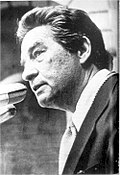 Octavio PazBoth received Neustadt International Prize for Literature
Fame.am measures public visibility signals. It does not measure human value, talent, morality, or credibility.