Rabindranath Tagore
Bengali poet, philosopher and polymath (1861-1941) · India · Writers · Died at 80
Rabindranath Tagore is read about 3,052 times a day, in 168 languages.
A typical day, 30 days to 15 October 2026
The middle day of the days counted, so one week of news cannot move it. The line under it is the last 390 days, one point a day.
Something wrong?In 1913, he became the first Asian and first non-European to win the Nobel Prize in Literature - then went on to write the national anthems of two countries. A polymath who reshaped Bengali art, music, and literature while denouncing nationalism itself.
A life in dates
Also in Deutsch
Photos 8
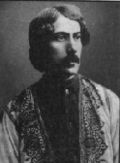
 Rabindranath Tagore in 1909
 "Rabindra Nath Tagore meets Sudhindra Bose at the State University of Iowa, Iowa City" photo, from- Sudhindra Bose - Fifteen Years in America (page 320 crop)

 An exhibition of books, music and portfolios on Tagore jointly organised by Sahitya Akademi, Lalit Kala Akademi and Sangeet Natak Akademi, in New Delhi on May 07, 2011
 Az élet megismerése Rabindranáth Tagore
 Balmeeki, portrayed by Ranbindranath Tagore himself
 Bengali Akarmatrik Swaralipi
 Boat used by Rabindranath Tagore at the pond of Shelaidaha Kuthibari , Kushtia
In their own words 10
 ,
The truth comes as conqueror only because we have lost the art of receiving it as guest.
The idea of the Nation is one of the most powerful anaesthetics that Man has invented.
In the heart of Europe runs the purest stream of human love, of justice, of spirit of self-sacrifice for higher ideals.
Awards
Family
 Rabindranath Tagore
Partners


Brothers and sisters




Is this everyone?
Only relatives with a profile here are drawn, so a family can be larger than this. A line here can also be wrong.
Correct this familyAbout this person
Born into a Bengali Brahmin family in Calcutta on 7 May 1861, Tagore wrote poetry at eight and by sixteen had released poems under the pseudonym Bhānusiṃha that literary authorities mistook for long-lost classics. By 1877 he was publishing short stories and dramas under his own name. His 1913 Nobel Prize recognised the "profoundly sensitive, fresh and beautiful" poetry of Gitanjali, making him the first lyricist to win the award. He modernised Bengali art by rejecting rigid classical forms, producing a vast canon: paintings, sketches, hundreds of texts, some two thousand songs, novels like Gora and Ghare-Baire. A humanist and critic of nationalism, he denounced the British Raj and advocated independence. He founded Visva-Bharati University and composed "Jana Gana Mana" and "Amar Sonar Bangla" - chosen as the national anthems of India and Bangladesh. He died on 7 August 1941.
In common with Rabindranath
Writers from India 5



Fame.am measures public visibility signals. It does not measure human value, talent, morality, or credibility.