William James
American philosopher, psychologist, and pragmatist (1842-1910) · United States · Academics · Died at 68
William James is read about 1,363 times a day, in 88 languages.
A typical day, 30 days to 15 October 2026
The middle day of the days counted, so one week of news cannot move it. The line under it is the last 390 days, one point a day.
Something wrong?He trained as a doctor, taught anatomy, and never saw a patient - then built American psychology from scratch and co-founded pragmatism, the first homegrown school of American philosophy.
A life in dates
Also in Deutsch
Photos 8
 William James by Alice M. Boughton, c. 1907, platinum print, from the National Portrait Gallery - NPG-NPG 87 37James-000001 (cropped)
 British Library digitised image from page 270 of "Voyage au Brésil, traduit de l'anglais ... par F. Vogeli. Ouvrage illustré, etc" (cropped)
 British Library digitised image from page 270 of "Voyage au Brésil, traduit de l'anglais ... par F. Vogeli. Ouvrage illustré, etc"
 Head of Alexandrina
 Houghton 2002M-44 - Alice Gibbens James
 Wilky James recovering from his wounds
 Libro dei soci, con abbonamenti di william e henry james, gennaio 1874, gabbinetto scientifico letterario veiusseux
 PSM V77 D420 Handwritten note of william james concerning his health
In their own words 10
 ,
We have nothing to do but to receive, resting absolutely upon the merit, power, and love of our Redeemer.
All our scientific and philosophic ideals are altars to unknown gods.
Freedom is only necessity understood.
Family
Parents
 William James
Partners

Brothers and sisters
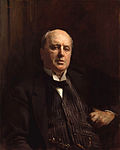

Is this everyone?
Only relatives with a profile here are drawn, so a family can be larger than this. A line here can also be wrong.
Correct this familyAbout this person
Born January 11, 1842, into a wealthy family - his father a Swedenborgian theologian, his brother the novelist Henry James - William James studied medicine at Harvard and joined the faculty to teach anatomy. He never practiced. Instead he turned to psychology, offering the first psychology course in the United States, then published The Principles of Psychology, a text that anchored the young field. He moved into philosophy and with Charles Sanders Peirce established pragmatism, the doctrine that ideas prove themselves in practice, not abstraction. His Essays in Radical Empiricism and The Varieties of Religious Experience, an inquiry into mysticism and mind-cure, widened his reach across epistemology, religion, and metaphysics. He died August 26, 1910, ranked second only to Wilhelm Wundt in a 1991 survey of psychologists, his thinking woven into the work of Dewey, Russell, Wittgenstein, and Rorty.
Academics from the United States 6



Fame.am measures public visibility signals. It does not measure human value, talent, morality, or credibility.