John Forbes Nash Jr.
American mathematician and economist (1928-2015) · United States · Academics · Died at 86
John Forbes Nash Jr. is read about 4,320 times a day, in 95 languages.
A typical day, 30 days to 15 October 2026
The middle day of the days counted, so one week of news cannot move it. The line under it is the last 390 days, one point a day.
Something wrong?A mind that reshaped how we understand competition, cooperation, and strategic choice - then spent decades fighting itself.
A life in dates
Also in Deutsch
Photos 8


In their own words 9
 ,
, You don't have to be a mathematician to have a feel for numbers. A movie, by the way, was made - sort of a small-scale offbeat movie - called Pi recently.
People are always selling the idea that people with mental illness are suffering. I think madness can be an escape.
Though I had success in my research both when I was mad and when I was not, eventually I felt that my work would be better respected if I thought and acted like a 'normal' person.
Awards
Family
John Forbes Nash Jr.Partners

Is this everyone?
Only relatives with a profile here are drawn, so a family can be larger than this. A line here can also be wrong.
Correct this familyAbout this person
John Forbes Nash Jr. introduced the Nash equilibrium and other core game theory concepts as a graduate student at Princeton, work that would eventually earn him the 1994 Nobel Prize in Economics alongside John Harsanyi and Reinhard Selten. In the 1950s he proved the Nash embedding theorems by solving nonlinear partial differential equations in Riemannian geometry, and with Ennio De Giorgi resolved Hilbert's nineteenth problem - a question open for nearly sixty years - through their theorem on the smoothness of solutions to elliptic and parabolic equations. In 1959 Nash began showing signs of schizophrenia and spent years in psychiatric hospitals; after 1970 his condition slowly improved, and by the mid-1980s he had returned to academic work. He shared the 2015 Abel Prize with Louis Nirenberg for contributions to partial differential equations. Sylvia Nasar's 1998 book A Beautiful Mind and the 2001 Ron Howard film brought his illness and recovery to a mass audience; Nash died in a car accident weeks after receiving the Abel Prize.
In common with John
 Milton FriedmanBoth received Prize in Economic Sciences in Memory of Alfred Nobel
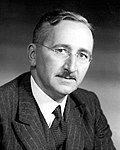 Friedrich HayekBoth received Prize in Economic Sciences in Memory of Alfred Nobel
 Jean-Pierre SerreBoth received Abel Prize
 Richard S. HamiltonBoth received Steele Prize for Seminal Contribution to Research
 Paul KrugmanBoth received Prize in Economic Sciences in Memory of Alfred Nobel
 Amartya SenBoth received Prize in Economic Sciences in Memory of Alfred Nobel
Fame.am measures public visibility signals. It does not measure human value, talent, morality, or credibility.