Edward Thorndike
American psychologist · United States · Academics · Lived 1874 to 1949 · aged 74
Edward Thorndike is read about 296 times a day, in 57 languages.
A typical day, 30 days to 8 October 2026
The middle day of the days counted, so one week of news cannot move it. The line under it is the last 383 days, one point a day.
Something wrong?He put cats in puzzle boxes and timed how long it took them to escape - then built a theory of learning that shaped a century of classrooms. His "law of effect" made reinforcement the lever of behavior change.
A life in dates
Also in Deutsch
Photos 5
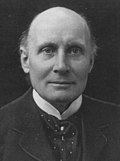
 PSM V80 D211 Edward Lee Thorndike
 Animal intelligence - an experimental study of the associative processes in animals (1898?) (17575801703)
 Animal intelligence - an experimental study of the associative processes in animals (1898?) (18196405255)
 Animal intelligence - an experimental study of the associative processes in animals (1898?) (18196417065)
 Animal intelligence - an experimental study of the associative processes in animals (1898?) (18196427415)
In their own words 4
 ,
Selective breeding can alter man's capacity to learn, to keep sane, to cherish justice or to be happy.
Psychology is the science of the intellects, characters and behavior of animals including man.
Psychology helps to measure the probability that an aim is attainable.
Awards
Family
Edward ThorndikeChildren
Brothers and sisters

Is this everyone?
Only relatives with a profile here are drawn, so a family can be larger than this. A line here can also be wrong.
Correct this familyAbout this person
Edward Lee Thorndike was born August 31, 1874, and spent nearly his entire career at Teachers College, Columbia University. His comparative psychology experiments led to his theory of connectionism, laying the scientific foundation for educational psychology. The law of effect - his core contribution - established that behaviors followed by satisfying consequences are more likely to recur, giving empirical shape to reinforcement theory and behavior analysis. He also applied his methods to industrial problems like employee testing. He served as president of the American Psychological Association in 1912 and sat on the board of the Psychological Corporation. A 2002 survey ranked him the ninth-most cited psychologist of the 20th century. He died August 9, 1949, having turned the puzzle box into a blueprint for the classroom.
In common with Edward



Academics from the United States 1

Fame.am measures public visibility signals. It does not measure human value, talent, morality, or credibility.