Arrigo Sacchi
Italian association football manager · Italy · Footballers · Born 1946 · age 80
Arrigo Sacchi is read about 857 times a day, in 40 languages.
A typical day, 30 days to 8 October 2026
The middle day of the days counted, so one week of news cannot move it. The line under it is the last 76 days, one point a day.
Something wrong?The manager who never played the game professionally - spent years selling shoes - then built AC Milan into one of the greatest club sides ever assembled, winning back-to-back European Cups and redefining how football could be coached.
A life in dates
Also in Deutsch
Photos 3


In their own words 1
 ,
A jockey does not have to have been a racehorse.
Awards
About this person
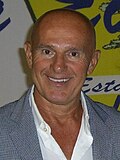
Arrigo Sacchi was born 1 April 1946 and worked for years as a shoe salesman, never playing professional football. When critics questioned his credentials, he shot back: "I never realised that in order to become a jockey you have to have been a horse first." He took over AC Milan in 1987 and won Serie A in his debut season, then dominated Europe with consecutive European Cups in 1989 and 1990 - his Milan squad from those years is widely regarded as one of the greatest club sides of all time. From 1991 to 1996 he coached Italy, leading them to the 1994 World Cup final, where they lost to Brazil on penalties. He once said football is "the most important of the least important things in life."
In common with Arrigo
 Frank RijkaardBoth received UEFA President's Award
 Fabio CapelloBoth received Italian Football Hall of Fame - Italian manager
 Simon KjærBoth received UEFA President's Award
 Raymond KopaBoth received UEFA President's Award
 Claudio RanieriBoth received Italian Football Hall of Fame - Italian manager
 Josef MasopustBoth received UEFA President's Award
Fame.am measures public visibility signals. It does not measure human value, talent, morality, or credibility.