Ronald Ross
British doctor, Nobel laureate, writer, and artist (1857-1932) · United Kingdom · Doctors · Died at 75
Ronald Ross is read about 166 times a day, in 89 languages.
A typical day, 30 days to 15 October 2026
The middle day of the days counted, so one week of news cannot move it. The line under it is the last 390 days, one point a day.
Something wrong?He proved mosquitoes carry malaria - a 1897 find that turned a ancient killer into something you could actually fight, and won him the 1902 Nobel.
A life in dates
Also in Deutsch
Photos 8
 Ronald Ross
 Portrait of Sir Ronald Ross (1857-1932) Wellcome L0035995
 PSM V87 D071 Ronald Ross
 Ross Ronald 1857-1932
 Sir Ronald Ross. Photograph by Grove, Son & Boulton after Ja Wellcome V0027104
 Sir Ronald Ross. Photograph, c.1890. Wellcome V0027527
 Sir Ronald Ross. Photograph. Wellcome V0028781
 Sir Ronald Ross - portrait Wellcome L0011947
In their own words 1
 ,
This day relenting God Hath placed within my hand A wondrous thing; and God Be praised.
Awards
Family
Parents
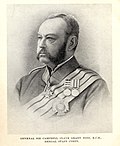 Ronald Ross
Partners
Is this everyone?
Only relatives with a profile here are drawn, so a family can be larger than this. A line here can also be wrong.
Correct this familyAbout this person
Ronald Ross was a British doctor who spent 25 years in the Indian Medical Service, where in 1897 he spotted the malarial parasite inside a mosquito's gut - the proof that mosquitoes transmit the disease. The Nobel came in 1902. After leaving India he taught at Liverpool School of Tropical Medicine for a decade, then in 1926 became Director-in-Chief of the Ross Institute and Hospital for Tropical Diseases, founded in his name. He stayed until his death in 1932. Outside medicine he wrote poems and novels, composed songs, painted, and dabbled in mathematics - a side catalogue that never quite escaped the shadow of that one insect dissection.
Doctors from the United Kingdom 6


Fame.am measures public visibility signals. It does not measure human value, talent, morality, or credibility.