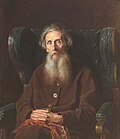
Mikhail Bakhtin
Russian intellectual and philosopher (1895-1975) · Russia · On the map · Academics · Died at 79
A Russian philosopher whose ideas on language and dialogue sat dormant for decades before scholars in the 1960s unearthed work that would ripple across Marxism, semiotics, anthropology, and half a dozen other fields he never set out to unify.
Mikhail Bakhtin is read about 580 times a day, in 58 languages.
A typical day, 30 days to 14 November 2026
The middle day of the days counted, so one week of news cannot move it. The line under it is the last 400 days, one point a day.
Something wrong?People around Mikhail
Close ties




Media & music


In their own words 1
 ,
Language is not a neutral medium that passes freely and easily into the private property of the speaker's intentions; it is populated - overpopulated - with the intentions of others.
About this person
Mikhail Mikhailovich Bakhtin was born 16 November 1895 and spent the 1920s engaged in Soviet debates on aesthetics and literature, developing a distinctive position on the philosophy of language, ethics, and literary theory that few noticed at the time. His writings ranged across subjects broad enough to later inspire traditions as different as Marxism, semiotics, structuralism, and religious criticism, and disciplines from history and philosophy to sociology, anthropology, and psychology. The work went largely unrecognized until Russian scholars rediscovered him in the 1960s, decades after he'd done it. He died 7 March 1975, his influence arriving late but landing wide.