He dissected how power works through prisons, hospitals, and sex itself - not by banning or oppressing, but by classifying, observing, and shaping what counts as normal. His books rewired how scholars think about control, madness, and the body.
A life in dates
Also in Deutsch
Photos 8

.jpg?width=1200)
.jpg?width=1200)


In their own words 10
 ,
, One can say that the author is an ideological product, since we represent him as the opposite of his historically real function.
I don't feel that it is necessary to know exactly what I am. The main interest in life and work is to become someone else that you were not in the beginning.
I'm very proud that some people think that I'm a danger for the intellectual health of students.
In their orbit
About this person
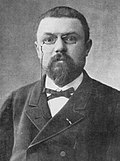
Born in 1926 into an upper-middle-class family in Poitiers, Foucault studied philosophy and psychology in Paris, coming under the influence of Jean Hyppolite and Louis Althusser. After years as a cultural diplomat, he published The History of Madness in 1961, then The Birth of the Clinic and The Order of Things through the mid-1960s - works that built what he called "archaeology," a method for excavating how knowledge systems emerge and govern. He lectured in Tunis, then returned to head the philosophy department at Paris VIII before joining the Collège de France in 1970, a post he held until his death. In the 1970s he published Discipline and Punish and The History of Sexuality, refining his genealogical approach to trace how power circulates through institutions and daily life. Active in left-wing campaigns for penal reform and human rights, he died in Paris in 1984 from AIDS complications - the first major French public figure lost to the disease. His partner, Daniel Defert, founded the AIDES charity in response, which still campaigns today.
In common with Michel

Academics from France 4



Fame.am measures public visibility signals. It does not measure human value, talent, morality, or credibility.