Luís I of Portugal
King of Portugal from 1861 to 1889 · Portugal · Artists · Lived 1838 to 1889 · aged 50
Luís I of Portugal is read about 464 times a day, in 48 languages.
A typical day, 30 days to 8 October 2026
The middle day of the days counted, so one week of news cannot move it. The line under it is the last 76 days, one point a day.
Something wrong?The second son who became king only because his brother died first - Luís I ruled Portugal for nearly three decades in the late 1800s, earning the nickname "the Popular" while presiding over a European monarchy in quiet decline.
Also in Deutsch
Photos 8
 Louis I, Koning van Portugal (1838 - 1889) (1)
 1838 Luis-15
 1881-10-22, La Ilustración Española y Americana, Valencia de Alcántara, Los reyes Luis I y Alfonso XII salen de la estación para dirigirse al campamento (cropped)
 1881-10-22, La Ilustración Española y Americana, Valencia de Alcántara, Los reyes Luis I y Alfonso XII salen de la estación para dirigirse al campamento
 A cerimónia de imposição do barrete cardinalício - O Occidente (16Jun1879)
 Amélie with her husband and father-in-law
 Canhoeira com Pavilhão Real (1886) - D. Luís I de Portugal
 Carta patente do rei Luís I de Portugal de 1878
Awards
Family
Parents
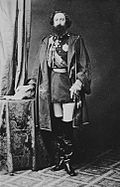

 Luís I of Portugal
Partners

Children

Brothers and sisters



Is this everyone?
Only relatives with a profile here are drawn, so a family can be larger than this. A line here can also be wrong.
Correct this familyAbout this person
Born 31 October 1838 as the Duke of Porto, Luís Filipe Maria Fernando Pedro was the younger son of Queen Maria II and King Ferdinand II, a prince of the House of Braganza never meant to wear the crown. When his elder brother Pedro V died in 1861, Luís inherited a throne he hadn't expected. He reigned for twenty-eight years, from 1861 until his death on 19 October 1889, managing the Portuguese monarchy through an era when Europe's old royal houses were losing their grip. His subjects called him "the Popular," a title that suggests he kept their favor even as the world around him shifted.


Fame.am measures public visibility signals. It does not measure human value, talent, morality, or credibility.