Friedrich Carl von Savigny
German jurist (1779-1861) · Academics · Died at 82
Friedrich Carl von Savigny is read about 180 times a day, in 41 languages.
Counted to 15 September 2026, not since.
The middle day of the days counted, so one week of news cannot move it. The line under it is the last 60 days, one point a day.
Something wrong?He argued that law wasn't something you could draft from scratch on Enlightenment principles - it grew organically from a people's spirit and history, like language. That position made him the face of the German historical school of jurisprudence and shifted how Europe thought about legal reform.
Also in Deutsch
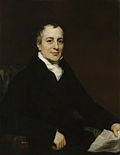
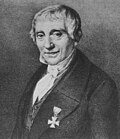
Photos 8
.jpg?width=1200)


Awards
Family
 Friedrich Carl von Savigny
Partners

Children
Is this everyone?
Only relatives with a profile here are drawn, so a family can be larger than this. A line here can also be wrong.
Correct this familyAbout this person
Born in 1779, Savigny trained as a jurist and joined the University of Berlin's faculty, serving as its rector in 1812-1813. Alongside Gustav Hugo, he developed the historical school's core claim: that law emerges from custom and collective experience rather than abstract reason. The framework appealed to those wary of revolutionary codification and gave him influence beyond the academy. Prussia brought him into the State Council, then named him Minister of State for Legal Reform from 1842 to 1848. He died in 1861, having spent decades insisting that a nation's law must be read as biography, not blueprint.


Fame.am measures public visibility signals. It does not measure human value, talent, morality, or credibility.