Federico Fellini is read about 2,531 times a day, in 133 languages.
A typical day, 30 days to 15 October 2026
The middle day of the days counted, so one week of news cannot move it. The line under it is the last 390 days, one point a day.
Something wrong?His films - baroque dreamscapes where circus freaks, priests, and movie stars collide - made him the poet of postwar Italian disillusionment and the director whose vision critics still rank among cinema's two or three finest.
A life in dates
 Ginger and FredFilm, 1986Director, Writer1985Golden Lion for Lifetime AchievementAwardPesto kai tha gineiSeries, 1985Guest1984“Talking about dreams is like talking about movies, since the cinema uses the language of dreams; years can pass in a second and you can hop from one place to another.”In their wordsAs quoted in Rolling Stone no. 421 (1984)David di Donatello for Best Original ScriptAwardDavid di Donatello Luchino ViscontiAward1980
 City of WomenFilm, Director, Writer1976“Cinéma-vérité? I prefer 'cine-mendacity'. A lie is always more interesting than the truth...Fiction may have a greater truth than everyday, obvious reality.”In their wordsFellini on Fellini (1976) edited by Anna Keel and Christian Strich; translated by Isabel Quigly.1974
 Spécial cinémaSeries
 We All Loved Each Other So MuchFilm, 1974Federico Fellini1972
 Le Grand ÉchiquierSeries
 RomaFilm, 1972Director, Writer1969
 Fellini: A Director's NotebookFilm, Director, Writer1967Titel, Thesen, TemperamenteSeries1965“All art is autobiographical; the pearl is the oyster’s autobiography.”In their wordsDecember 1965On the autobiographical nature of his films, in The Atlantic (December 1965)“Even if I set out to make a film about a fillet of sole, it would be about me.”In their wordsDecember 1965On the autobiographical nature of his films, in The Atlantic (December 1965)“Cinema is an old whore, like circus and variety, who knows how to give many kinds of pleasure. Besides, you can’t teach old fleas new dogs.”In their wordsDecember 1965As quoted in in The Atlantic (December 1965)1963
 8½Film, Director, Writer1962
 The Merv Griffin ShowSeries1961Nastro d'Argento for Best SubjectAward1960Palme d'OrAward
 Fellini on “Second Look”Series, 1960
 La Dolce VitaFilm, 1960Director, Writer1957David di Donatello for Best DirectorAward1956
 CinépanoramaSeries1955Nastro d'Argento for Best ScreenplayAward
 The SwindleFilm, 1955Director, Writer1954Nastro d'Argento for the director of the best filmAward1953Grand Jury Prize of the Venice Film FestivalAwardSilver LionAward
 The OscarsSeries, 19531952
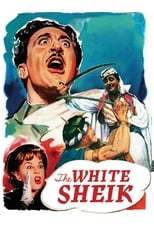 The White SheikFilm, Director, Writer1950
 The Flowers of St. FrancisFilm, Writer1947
 Flesh Will SurrenderFilm, Writer1945
 Rome, Open CityFilm, Writer1920Born20 January 1920
Also in Deutsch
Photos 8


In their own words 10
 ,
What is an artist? A provincial who finds himself somewhere between a physical reality and a metaphysical one...
Talking about dreams is like talking about movies, since the cinema uses the language of dreams; years can pass in a second and you can hop from one place to another.
There is no end. There is no beginning. There is only the infinite passion of life.
Filmography 40
 NYNaples to New York
 HFHow Strange to be Named Federico
 FLFellini: I'm a Born Liar
 TMThe Voice of the Moon
 INIntervistaGFGinger and Fred
 AOAnd the Ship Sails On
 ITIl tassinaroCWCity of Women
 OROrchestra Rehearsal
 FCFellini's CasanovaWMWe All Loved Each Other So Much
 AMAmarcordRORoma
 TCThe Clowns
 AWAlex in Wonderland
 SASatyriconFNFellini: A Director’s Notebook
 SDSpirits of the Dead
 JSJuliet of the Spirits8½
 BOBoccaccio '70LVLa Dolce Vita
 NCNights of CabiriaTSThe Swindle
 LSLa Strada
 IVI Vitelloni
 LCLove in the CityTSThe White Sheik
 TIThe City Defends Itself
 VLVariety LightsTFThe Flowers of St. Francis
 THThe Path of Hope
 ILIn the Name of the Law
 TPThe Mill on the Po
 LAL'Amore
 WPWithout PityFSFlesh Will Surrender
 PAPaisanRCRome, Open City
191 credits on file
Television 11
 UÉUn film et son époqueSCSpécial cinémaLÉLe Grand Échiquier
 TSThe Dick Cavett ShowTSThe Merv Griffin ShowFLFellini on “Second Look”CICinépanoramaTOThe Oscars
Awards
In their orbit
 Spouse: Giulietta Masina
About this person
Born in 1920, Fellini started as a screenwriter before directing I Vitelloni in 1953, then La Strada in 1954 - early work that mixed realism with something stranger. La Dolce Vita took the Palme d'Or in 1960 and made him famous for capturing Rome's hollow glamour. 8½ followed in 1963, a spiral into a director's creative paralysis that Sight & Sound would later call the tenth-greatest film ever made. He kept going - Amarcord, Fellini Satyricon, Casanova - piling up four competitive Oscars (a record in the foreign-language category) and another seventeen nominations. By the time the Academy gave him the lifetime achievement award in 1993, critics had placed him second in their poll of all-time directors. He died eight months later, leaving a filmography no one's quite matched for blending the sacred and the sleazy.


Fame.am measures public visibility signals. It does not measure human value, talent, morality, or credibility.