Coleman Hawkins
American jazz saxophonist (1904-1969) · United States · On the map · Musicians · Died at 64
Coleman Randolph Hawkins, nicknamed "Hawk" and sometimes "Bean", was an American jazz tenor saxophonist. One of the first prominent jazz musicians on his instrument, as Joachim E. Berendt explained: "There were some tenor players before him, but the instrument was not an acknowledged jazz horn."
Coleman Hawkins is read about 238 times a day, in 36 languages.
A typical day, 30 days to 11 November 2026
The middle day of the days counted, so one week of news cannot move it. The line under it is the last 109 days, one point a day.
Something wrong?People around Coleman
Close ties

 Norman Granz Produced Coleman Hawkins Encounters Ben Webster (1959)
 John Coltrane Bandmate in Thelonious Monk Septet
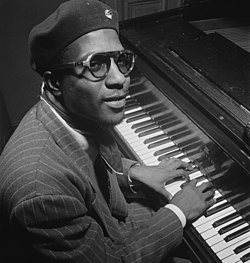 Thelonious Monk Bandmate in Thelonious Monk Septet
 Art Blakey Bandmate in Thelonious Monk Septet
- Wilbur Ware Bandmate in Thelonious Monk Septet
- Bob Thiele Produced Desafinado and Today and Now
- Gigi Gryce Bandmate in Thelonious Monk Septet
- Ray Copeland Bandmate in Thelonious Monk Septet
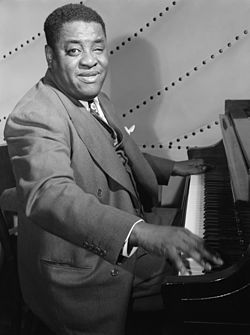 Art Tatum Duets: The Man I Love and Cocktails for Two
 Creed Taylor Produced Hawkins! Alive! At the Village Gate
- Esmond Edwards Produced Coleman Hawkins with the Red Garland Trio (1959)
 Lena Horne Duets: The Man I Love
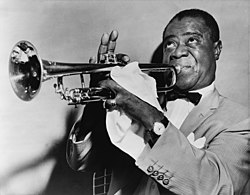 Louis Armstrong Duets: Little Girl Blue (1935)
 Judy Garland Duets: Little Girl Blue (1935)
 Frank Sinatra Duets: Little Girl Blue (1935)
 Barbra Streisand Duets: The Man I Love
 Doris Day Duets: Little Girl Blue (1935)
 Ella Fitzgerald Duets: Little Girl Blue (1935)
 Billie Holiday Duets: The Man I Love
 Sarah Vaughan Duets: The Man I Love
 Sonny Rollins Influenced by Coleman
 Larry Adler Duets: The Man I Love
 Chu Berry Influenced by Coleman
- Orrin Keepnews Produced The Hawk Flies High (1957)
Media & music
Listen
Spotify


About this person
Hawkins biographer John Chilton described the prevalent styles of tenor saxophone solos prior to Hawkins as "mooing" and "rubbery belches". Hawkins denied being first and noted his contemporaries Happy Caldwell, Stump Evans, and Prince Robinson, although he was the first to tailor his method of improvisation to the saxophone rather than imitate the techniques of the clarinet. Hawkins's virtuosic, arpeggiated approach to improvisation, with his characteristic rich, emotional, and vibrato-laden tonal style, was the main influence on a generation of tenor players that included Chu Berry, Charlie Barnet, Tex Beneke, Ben Webster, Vido Musso, Herschel Evans, Buddy Tate, and Don Byas, and through them the later tenormen, Arnett Cobb, Illinois Jacquet, Flip Phillips, Ike Quebec, Al Sears, Paul Gonsalves, and Lucky Thompson. While Hawkins became known with swing music during the big band era, he had a role in the development of bebop in the 1940s.


