Charles II of England
King of England, Scotland, and Ireland (1630-1685) · United Kingdom · Historical Figures · Died at 54
Charles II of England is read about 6,867 times a day, in 86 languages.
A typical day, 30 days to 15 October 2026
The middle day of the days counted, so one week of news cannot move it. The line under it is the last 390 days, one point a day.
Something wrong?A king who fled his own country after losing a civil war, spent nine years wandering Europe in exile, then returned on his thirtieth birthday to reclaim the throne - and ruled for twenty-five years by balancing public Anglicanism with private Catholic sympathies and a court notorious for its mistresses.
Also in Deutsch
Photos 12


 Charles as an infant in 1630, painting attributed to Justus van Egmont
 Portrait by William Dobson, c. 1642 or 1643
 Cast gold coronation medal of Charles II, dated 1651
 Charles in exile, painted by Philippe de Champaigne, c. 1653
 Ball given to Charles at The Hague on his departure to England
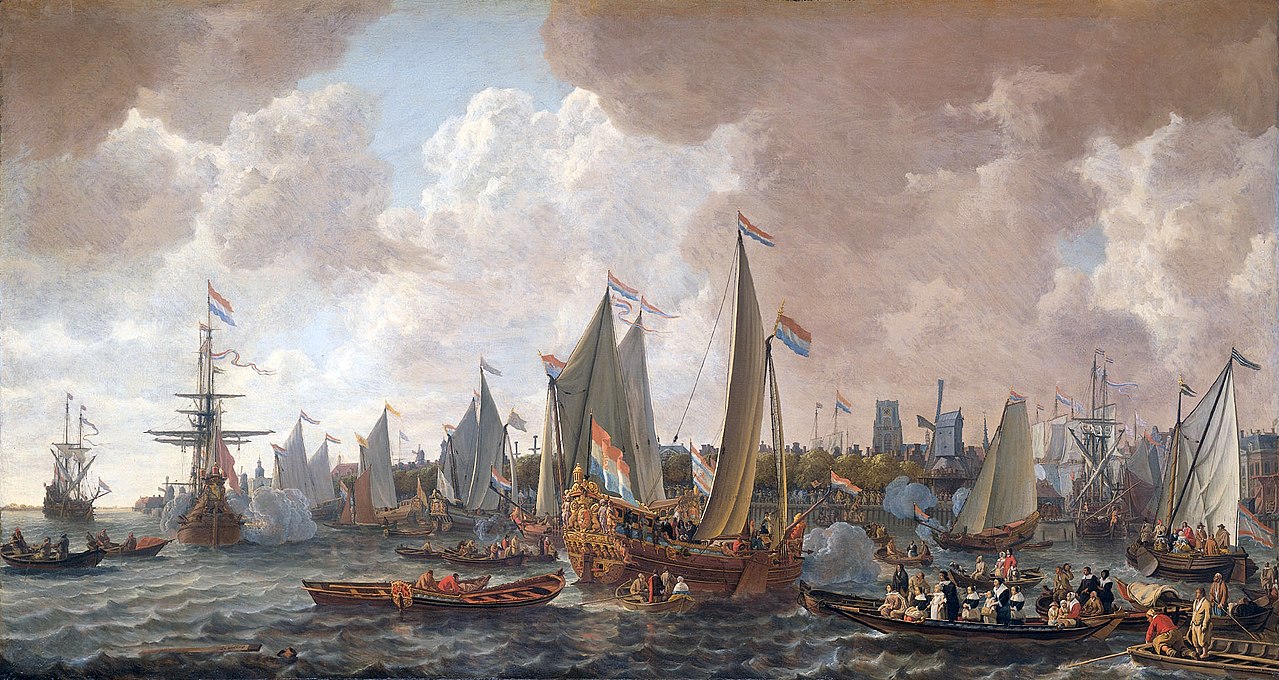 Charles sailed from his exile in the Netherlands to his restoration in England in May 1660. Painting by Lieve Verschuier.
In their own words 5
 ,
If we are understood, more words are unnecessary; if we are not likely to be understood, they are useless.
Mrs. Lane and I took our journey towards Bristol, resolving to lie at a place called Long Marson, in the vale of Esham.
And who cannot but remember, That Religion, Liberty and Property were all lost and gone, when the Monarchy was shaken off, and could never be reviv'd till that was restored.
Awards
Family
Parents

 Charles II of England
Partners

Children
 Charles Lennox, 1st Duke of Richmond
 George FitzRoy, 1st Duke of Northumberland
 James Scott, 1st Duke of Monmouth
 Charles FitzRoy, 2nd Duke of Cleveland
 Henry FitzRoy, 1st Duke of Grafton
 Charlotte Lee, Countess of Lichfield
 Charles Beauclerk, 1st Duke of St Albans
 Charles FitzCharles, 1st Earl of Plymouth
 Mary Tudor, Countess of Derwentwater
 Barbara FitzRoy
 Charlotte Jemima FitzRoy
 Catherine FitzCharles
- James de la Cloche
 Mary Crofts
 Anne Lennard, Countess of Sussex
- Cecelia FitzRoy
- James Beauclerk, Lord Beauclerk
Is this everyone?
Only relatives with a profile here are drawn, so a family can be larger than this. A line here can also be wrong.
Correct this familyAbout this person
Charles II became king of Scotland in 1649 days after his father Charles I was executed, but Oliver Cromwell crushed him at the Battle of Worcester in 1651 and sent him into continental exile for nearly a decade. Cromwell's death in 1658 opened the way for the Restoration, and on 29 May 1660 Charles returned to London amid public celebration. His reign threaded between religious pressures: Parliament passed the Clarendon Code to fortify the Church of England while Charles quietly favored tolerance, signed a secret pact with Louis XIV in 1670 promising eventual conversion to Catholicism, and saw his 1672 Declaration of Indulgence crushed by Parliament. The fabricated Popish Plot in 1679 ignited the Exclusion Crisis over his Catholic brother James and gave birth to the Whig and Tory parties; Charles dissolved Parliament in 1681 and ruled alone until his death in 1685. He fathered at least twelve illegitimate children, kept a court famous for its laxity, and left the throne to the brother whose religion had nearly torn the kingdom apart.
Historical Figures from the United Kingdom 6



Fame.am measures public visibility signals. It does not measure human value, talent, morality, or credibility.