Bernard Herrmann
American composer and conductor (1911-1975) · United States · On the map · Musicians · Died at 64
Bernard Herrmann was an American composer and conductor best known for his work in film scoring. He is widely regarded as one of the greatest film composers of all time.
Bernard Herrmann is read about 669 times a day, in 42 languages.
A typical day, 30 days to 6 November 2026
The middle day of the days counted, so one week of news cannot move it. The line under it is the last 104 days, one point a day.
Something wrong?People around Bernard

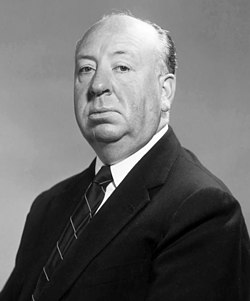 Alfred Hitchcock Bernard wrote Psycho and Vertigo
 Orson Welles Bernard wrote Citizen Kane (1946)
 Charles Ives Influenced Bernard
 Max Steiner Influenced Bernard
 Erich Wolfgang Korngold Influenced Bernard
 Percy Grainger Influenced Bernard
 Gregory Peck Bernard wrote Cape Fear (1962)
 James Mason Bernard wrote North by Northwest (1959)
 Agnes Moorehead Bernard wrote Citizen Kane (1946)
 Ray Collins Bernard wrote Citizen Kane (1946)
 Michael Rennie Bernard wrote 5 Fingers (1952)
 Henry Daniell Bernard wrote The Egyptian and Jane Eyre
 Bess Flowers Bernard wrote Vertigo and North by Northwest
 Alan Napier Bernard wrote Marnie (1964)
 Edith Evanson Bernard wrote Marnie (1964)
 James Stewart Bernard wrote Vertigo (1959)
 Joan Fontaine Bernard wrote Jane Eyre and Tender Is the Night
 John Carradine Bernard wrote The Egyptian and The Kentuckian
 Martin Balsam Bernard wrote Psycho and Cape Fear
 Gustavo Santaolalla Influenced by Bernard
 Hillary Brooke Bernard wrote The Man Who Knew Too Much (1956)
 Erskine Sanford Bernard wrote Citizen Kane (1946)
 Edmund Cobb Bernard wrote The Egyptian and Prince of Players
- Les Reed Duets: Les Bicyclettes De Belsize / Twisted Nerve (1969)
 Bernard Herrmann
Partners

Is this everyone?
Only relatives with a profile here are drawn, so a family can be larger than this. A line here can also be wrong. A marriage is drawn as ended only where its end is recorded, so a spouse drawn here may be a former one.
Correct this familyMedia & music
Listen
Spotify


Awards
About this person
Alex Ross writes that "Over four decades, he revolutionized movie scoring by abandoning the illustrative musical techniques that dominated Hollywood in the 1930s and imposing his own peculiar harmonic and rhythmic vocabulary." As a conductor, he championed the music of lesser-known composers.


