What kind of moment: History, Treaty signing
Treaty of Paris (1783): Benjamin Franklin, John Adams and John Jay meet
- When
- 3 September 1783
- Where
- Paris, Kingdom of France
On September 3, 1783, Britain formally recognized American independence through a treaty signed in Paris. The agreement ended seven years of war and established the United States as a sovereign nation, with territorial boundaries stretching to the Mississippi River.
The treaty dissolved the British Empire's control over thirteen colonies and created a new independent state. It redrew the map of North America, handed Britain's former territories to the Americans, and set a precedent for how colonial independence could be negotiated rather than simply seized.
In numbers
- Colonies recognized as independent
- 13 (Massachusetts, New Hampshire, Rhode Island, Connecticut, New York, New Jersey, Pennsylvania, Delaware, Maryland, Virginia, North Carolina, South Carolina, Georgia)
Where it sits in their lives
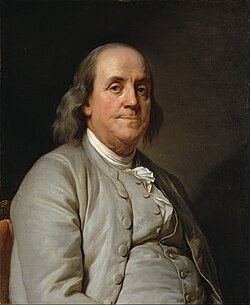 Benjamin Franklin1706 to 179077
 John Adams1735 to 182647
 John Jay1745 to 182937
- Their age at this moment
- Their other moments in history
How it unfolded
Battles of Lexington and Concord
Armed conflict begins in Massachusetts, launching what would become the Revolutionary War.
Declaration of Independence
The thirteen colonies formally declare independence from Great Britain; the war continues for another seven years.
Franco-American Alliance
France enters the war as an American ally, shifting military advantage and providing resources and troops.
Preliminary Articles Signed
Britain and the United States agree on preliminary terms in Paris; formal ratification and final treaty still pending.
Treaty of Paris Signed
Britain formally recognizes American independence and establishes borders, fishing rights, and territorial claims.
Congressional Ratification
The Continental Congress officially ratifies the Treaty of Paris, cementing its legal force.
- What followed
1783: Creation of international precedent for independence recognition
- What followed
1783: Westward expansion framework
- What followed
1783: British naval decline begins


More about this treaty signing
Before and after, with the same people
- American Revolutionary War begins
 FranklinSee the moment ›
- American Declaration of Independence
 Franklin, AdamsSee the moment ›
- Treaty of Paris (1783): Benjamin Franklin, John Adams and John Jay meetFranklin, Adams, JayThis moment
- 1800 United States presidential election: Thomas Jefferson winsAdamsSee the moment ›