
What kind of moment: History, Independence declaration
American Declaration of Independence
- When
- 4 July 1776
- Where
- United States
- Number of signers
- 56 delegates
On July 4, 1776, representatives from thirteen American colonies voted to break away from British rule, producing a document that announced their independence and explained why. Written mainly by Thomas Jefferson, it asserted that people have natural rights and governments need the consent of the governed. The declaration didn't end the war immediately-that took until 1783-but it transformed a colonial rebellion into a revolution backed by political philosophy, and its language about human equality became influential far beyond America.
On July 4, 1776, the Continental Congress in Philadelphia adopted Thomas Jefferson's Declaration of Independence, formally announcing the thirteen colonies' break from British rule and articulating a philosophical foundation for self-governance that would reshape political thought for centuries.
In numbers
- Number of signers
- 56 delegates
- Number of colonies represented
- 13
- Drafting committee size
- 3 members (Jefferson, Franklin, Adams)
Where it sits in their lives
 Thomas Jefferson1743 to 182633
 Thomas Stone1743 to 178733
 Timothy Matlack1736 to 182940
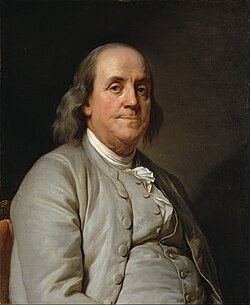 Benjamin Franklin1706 to 179070
- Their age at this moment
- Their other moments in history
How it unfolded
Stamp Act Congress
Delegates from nine colonies meet in New York to coordinate resistance to the Stamp Act, asserting that Parliament cannot tax colonies without their representation.
Drafting committee appointed
Continental Congress appoints Thomas Jefferson, Benjamin Franklin, John Adams, Roger Sherman, and Robert Livingston to draft a declaration of independence.
Declaration adopted
Continental Congress formally adopts the Declaration of Independence in Philadelphia after edits to Jefferson's draft.
First public reading
Declaration is read aloud publicly in Philadelphia and published in newspapers; copies distributed to colonies.
American victory at Saratoga
American forces defeat British General John Burgoyne, convincing France that colonial independence is achievable.
Treaty of Paris signed
Britain formally recognizes American independence; Revolutionary War effectively ends.
- What followed
1776: American Revolutionary War intensifies
- What followed
1778: French intervention and alliance
- What followed
1783: Treaty of Paris recognizes American independence
More about this independence declaration
Also named in the story
Before and after, with the same people
- American Revolutionary War begins
 FranklinSee the moment ›
- American Declaration of Independence

 Jefferson, Stone, MatlackThis moment
- Treaty of Paris (1783): Benjamin Franklin, John Adams and John Jay meet
 Franklin, AdamsSee the moment ›
- 1800 United States presidential election: Thomas Jefferson winsJefferson, AdamsSee the moment ›