
What kind of moment: History, Revolution
American Revolution declared
- When
- 1776
- Where
- Thirteen Colonies, United Colonies, United States
- Outcome
- Independence of the United States of America from the Kingdom of Great Britain; Dissolution of British America, establishment of British North America and Spanish Florida; Dissolution of the First British Empire, establishment of the Second British Empire
On July 4, 1776, the Second Continental Congress in Philadelphia adopted the Declaration of Independence, formally announcing that the thirteen British colonies in North America were breaking away to form a sovereign nation. Written largely by Thomas Jefferson, the document outlined grievances against King George III and articulated principles of natural rights that became foundational to American political thought. This declaration transformed a colonial rebellion into a revolution with explicit ideological stakes.
The Declaration of Independence redefined political legitimacy by grounding sovereignty in popular consent rather than hereditary monarchy. It supplied ideological language that would echo through independence movements worldwide for centuries. The document itself became more influential than the war that followed - its principles outlasted the specific grievances that prompted it.
In numbers
- Signers
- 56 delegates signed the final document
- Grievances enumerated
- 27 formal charges against King George III
How it unfolded
Virginia Resolution passes
Virginia delegates introduce resolution at Continental Congress calling for independence from Britain
Lee Resolution introduced
Richard Henry Lee formally proposes motion: "These United Colonies are, and of right ought to be, free and independent States"
Draft presented to Congress
Jefferson's draft, edited by Adams and Franklin, is laid before the full Continental Congress
Lee Resolution formally adopted
Congress votes 12-0 (with New York abstaining) to declare independence, effective immediately
Public reading in Philadelphia
Formal signing begins
Delegates begin signing the parchment copy; process continues for months as others arrive to add signatures
- What followed
1783: Treaty of Paris signed
- What followed
1781: Articles of Confederation adopted
- What followed
1787: Constitutional Convention convened
Named in the story
More about this revolution
Before and after, with the same people
- American Revolutionary War begins
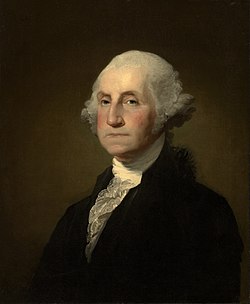
 WashingtonSee the moment ›
- American Revolution declaredWashingtonThis moment