
What kind of moment: History, War
Gulf War
- When
- 2 August 1990 to 28 February 1991
- Where
- Middle East and Persian Gulf
- Outcome
- Coalition victory
Iraq invaded and occupied Kuwait in August 1990, prompting the United States and a broad international coalition to respond militarily. Operation Desert Storm, which began in January 1991, combined an unprecedented air campaign with a swift ground invasion that liberated Kuwait in 100 hours-but left Saddam Hussein's regime intact and set the stage for decades of regional instability.
S. military conflict after the Cold War ended, reshaping American foreign policy, Middle Eastern geopolitics, and global attitudes toward unilateral intervention. The 42-day campaign against Iraq's invasion of Kuwait demonstrated new military technologies and established a template for 21st-century warfare that would echo through decades of subsequent conflicts.
In numbers
- Coalition nations
- 35 countries contributed militarily or logistically
- Estimated Iraqi military deaths
- Approximately 100,000
Where it sits in their lives
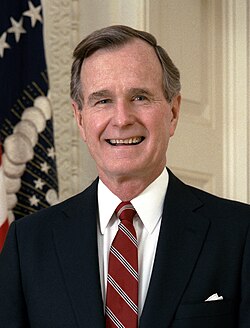 George H. W. Bush1924 to 201866
 Margaret Thatcher1925 to 201364
 Saddam Hussein1937 to 200653
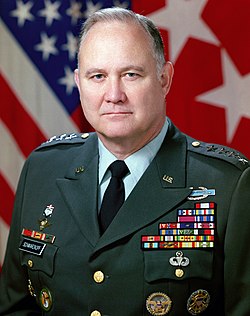 Norman Schwarzkopf Jr.1934 to 201255
- Their age at this moment
- Their other moments in history
How it unfolded
Iraq invades Kuwait
Iraqi forces under Saddam Hussein cross the border and occupy Kuwait. The UN Security Council condemns the invasion within hours; President George H.W. Bush begins assembling an international coalition.
UN authorizes force
The UN Security Council passes Resolution 678, authorizing member states to use all necessary means to eject Iraqi forces from Kuwait if Iraq does not withdraw by January 15, 1991.
Operation Desert Storm begins
The coalition launches a massive air offensive against Iraqi targets. F-117 Nighthawk stealth fighters lead the attack on Baghdad. CNN broadcasts the bombing live, marking the first televised war in real time.
Ground war launches
Operation Desert Sabre begins with coalition forces executing a massive left-hook flanking maneuver. General Schwarzkopf's strategy aims to encircle and destroy the Iraqi Republican Guard.
Kuwait City liberated
Coalition forces enter Kuwait City as Iraqi troops flee northward. Kuwaiti civilians emerge into streets, though widespread looting and sabotage are evident throughout the country.
UN passes permanent ceasefire resolution
- What followed
1991: No-Fly Zones and Ongoing Containment
- What followed
1992: Rise of Al-Qaeda and Anti-American Sentiment
- What followed
1991: Proliferation of Advanced Military Technology


Who took part

More about this war
Leaders
George H. W. Bush (United States, United Kingdom +4 more), Norman Schwarzkopf Jr., Chuck Horner, Margaret Thatcher, Fahd of Saudi Arabia, Hosni Mubarak
Saddam Hussein (Ba'athist Iraq)

