
What kind of moment: History, Election
1960 United States presidential election: John F. Kennedy wins
- When
- 8 November 1960
- Where
- United States
- Electoral College
- Kennedy 303, Nixon 219
On November 8, 1960, American voters elected Democrat John F. Kennedy president, narrowly defeating Republican Vice President Richard Nixon in one of the closest elections in U.S. history. Kennedy's victory marked a generational shift in American politics and raised questions about electoral integrity that would reverberate for decades.
Kennedy's win by 0.17 percentage points in the popular vote established the template for modern American presidential campaigns, particularly the strategic use of television and targeted regional organizing. His victory also intensified Cold War competition, as his campaign had criticized the Eisenhower administration for alleged strategic vulnerabilities.
In numbers
- Electoral College
- Kennedy 303, Nixon 219
- Kennedy's Age
- 43 - youngest elected president at the time
- Key Swing State
- Illinois - Kennedy won by 8,858 votes with 27 electoral votes
The result
Seats, change and vote share as the results table of 1960 United States presidential election gives them. No readers here: daily readers are counted from 2015 on.
How it unfolded
Kennedy Announces Candidacy
Senator John F. Kennedy declares his intention to seek the Democratic presidential nomination, positioning himself as a moderate Cold War liberal.
Democratic Convention
Kennedy secures the Democratic nomination on the first ballot at the Los Angeles Convention. He selects Lyndon B. Johnson as running mate to balance the ticket geographically and ideologically.
Republican Convention
Richard Nixon accepts the Republican nomination in Chicago. Henry Cabot Lodge Jr., U.N. Ambassador, becomes his running mate.
First Kennedy-Nixon Debate
The first televised presidential debate airs live from Chicago. Kennedy appears composed and tanned; Nixon appears pale and uneasy. Viewers who watched on television favored Kennedy; radio listeners favored Nixon.
Fourth Kennedy-Nixon Debate
The final televised debate takes place. Kennedy and Nixon debate foreign policy, with Kennedy attacking the Eisenhower-Nixon administration's record on Cuba and the Soviet Union.
Transition Begins
Kennedy begins the presidential transition. He meets with President Eisenhower and is briefed on classified national security matters, including the CIA's Bay of Pigs plan.
- What followed
1961: Bay of Pigs invasion
- What followed
1962: Cuban Missile Crisis
- What followed
1964: Civil Rights Act of 1964
Where it sits in their lives
 John F. Kennedy1917 to 196343
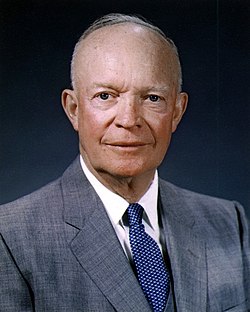 Dwight D. Eisenhower1890 to 196970
 Richard Nixon1913 to 199447
 Lyndon B. Johnson1908 to 197352
- Their age at this moment
- Their other moments in history
More about this election
Also named in the story
Before and after, with the same people
- John F. Kennedy's election

 Kennedy, JohnsonSee the moment ›
- Kennedy-Nixon presidential debates
 Kennedy, NixonSee the moment ›
- 1960 United States presidential election: John F. Kennedy wins
 Kennedy, Eisenhower, NixonThis moment
- Bay of Pigs InvasionKennedySee the moment ›
- Cuban Missile CrisisKennedySee the moment ›