← Fame through time1800-1899
The 19th century
Whose names filled the books of the 19th century - anyone at all, however long dead - counted as mentions per million words printed, so a period that simply published more does not inflate anyone.
Talked about then
Whose names appeared most in Russian books during the 19th century, whenever they lived.
- 1
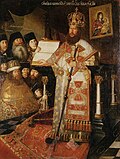 Patriarch Nikon of Moscow6.7
 - 2
 Macarius, Metropolitan of Moscow3.1
 - 3
 Nikolai Rezanov1.3
 - 4
 Boris Godunov0.99
 - 5
 Grand Duke Nicholas Mikhailovich of Russia0.94
 - 6
 Patriarch Joachim0.86
 - 7
 Vasili IV of Russia0.86
 - 8
 Nikolay Karamzin0.85
 - 9
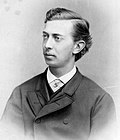 Nicholas Alexandrovich, Tsesarevich of Russia0.83
 - 10
 Anna of Russia0.82
 - 11
 Nikolay Semyonov0.75
 - 12
 Ivan I of Tver0.66
 - 13
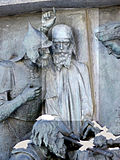 Avraamy Palitsyn0.64
 - 14
 Ivan I Aleksandrovich, Prince of Smolensk0.62
 - 15
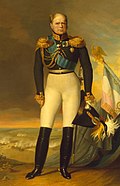 Grand Duke Konstantin Pavlovich of Russia0.62
 - 16
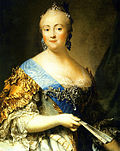 Elizabeth of Russia0.58
 - 17
 Alexandra Velyaminova0.57
 - 18
 Peter the Great0.53
 - 19
 Maximus the Greek0.53
 - 20
 Grand Duchess Alexandra Pavlovna of Russia0.43
 - 21
 Grand Duke Peter Nikolaevich of Russia0.42
 - 22
 Grand Duke Michael Nikolaevich of Russia0.42
 - 23
 Grand Duchess Olga Nikolaevna of Russia0.39
 - 24
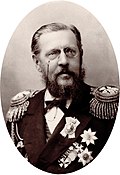 Grand Duke Konstantin Nikolayevich of Russia0.39
 - 25
 Grigory Orlov0.38
Lived then
The most notable people whose working lives fell in the 19th century, ranked where Wikipedia coverage and readership agree.
- 1
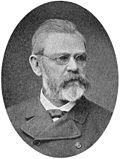 Robert Nobelnot measured-
 - 2
 Carl Richard Nybergnot measured-
 - 3
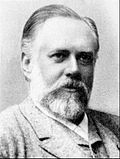 Rudolf Fredrik Bergnot measured-
 - 4
 Max Sievertnot measured-
How this is measured
- Placing people in time. Each person belongs to the century in which they were most active, around age 35, and never after their death.
- Who ranks highest. Within a century, people are ranked where two independent signals agree: how many of the world's Wikipedia language editions cover them, and how many people actually read about them. Article counts alone can be lifted by a person's own circle; readers cannot.
- Fame in print. The curves count how often a name appears in Google Books from 1800 to 2019, as a share of all the words printed each year, in the person's own language wherever that corpus exists. Those decades are over, so each measurement is made once and kept.
- What is left out. A lifetime is measured only from 1820, when there is enough print to judge; the five years after a death are skipped as obituaries; and a name shared with someone equally notable is credited to neither.