Walter Rudolf Hess
Swiss physiologist (1881-1973) · Switzerland · Doctors · Died at 92
Walter Rudolf Hess is read about 64 times a day, in 56 languages.
A typical day, 30 days to 8 October 2026
The middle day of the days counted, so one week of news cannot move it. The line under it is the last 76 days, one point a day.
Something wrong?He mapped the brain's command center for the body's involuntary life - heartbeat, breath, the machinery you never think about - and won a Nobel for showing which tiny regions pulled which levers.
A life in dates
Also in Deutsch
Photos 3


Awards
About this person
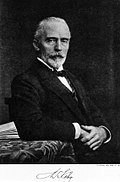
Walter Rudolf Hess was born on 17 March 1881 in Switzerland. He trained as a physiologist and spent years probing the brain's deeper structures, isolating the regions that governed internal organs without conscious thought. In 1949 he won the Nobel Prize in Physiology or Medicine for that work, sharing it with Egas Moniz. His findings revealed how a few cubic millimeters of tissue could dictate pulse, digestion, temperature - the autonomic empire beneath awareness. He died on 12 August 1973, having charted territory most people never know they carry.


Fame.am measures public visibility signals. It does not measure human value, talent, morality, or credibility.