Tim Berners-Lee
English computer scientist (born 1955) · United Kingdom · Developers
Tim Berners-Lee is read about 3,013 times a day, in 147 languages.
A typical day, 30 days to 15 October 2026
The middle day of the days counted, so one week of news cannot move it. The line under it is the last 390 days, one point a day.
Something wrong?He wrote the code that turned the internet into the World Wide Web - the browser, the server, the protocols that let strangers' machines talk. Everything clickable traces back to a 1989 proposal at CERN.
A life in dates
Also in Deutsch
Photos 8
.jpg?width=1200)


In their own words 10
 ,
, Almost everything which you needed to know in your daily life was written down somewhere.
Anyone who has lost track of time when using a computer knows the propensity to dream, the urge to make dreams come true and the tendency to miss lunch.
Now, if someone tries to monopolize the Web, for example pushes proprietary variations on network protocols, then that would make me unhappy.
Awards
GitHub
@timblFamily


Is this everyone?
Only relatives with a profile here are drawn, so a family can be larger than this. A line here can also be wrong.
Correct this familyAbout this person
Timothy John Berners-Lee was born 8 June 1955 in England. On 12 March 1989, working as a computer scientist, he proposed an information management system; by mid-November he'd made the first successful HTTP connection between client and server over the internet. He built the first web browser and web server, devised HTML and the URL system, then spent the next decades stewarding what he'd started - founding the World Wide Web Consortium, co-founding the World Wide Web Foundation, and holding research posts at MIT and Oxford. Queen Elizabeth II knighted him in 2004. In 2016 he received the Turing Award for inventing the Web and the algorithms that let it scale, and Time named him among the hundred most important people of the twentieth century.
In common with Tim
 Julian AssangeAlso in Inside the Dark Web (2014)
 Edward SnowdenAlso in Inside the Dark Web (2014)
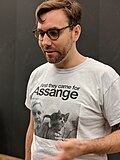 Jacob AppelbaumAlso in Inside the Dark Web (2014)
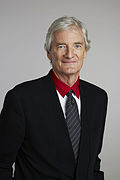 James DysonBoth received Lord Lloyd of Kilgerran Award
 Carl MalamudBoth received Internet Archive Hero award
 John Ffowcs WilliamsBoth received Sir Frank Whittle Medal
Fame.am measures public visibility signals. It does not measure human value, talent, morality, or credibility.