Thomas Hunt Morgan
American biologist (1866-1945) · United States · Scientists · Died at 79
Thomas Hunt Morgan is read about 238 times a day, in 73 languages.
A typical day, 30 days to 15 October 2026
The middle day of the days counted, so one week of news cannot move it. The line under it is the last 390 days, one point a day.
Something wrong?He proved genes live on chromosomes by breeding thousands of fruit flies in a cluttered lab at Columbia. That single insight - drawn from mutant eye color in Drosophila - rewrote how we understand inheritance and earned him the 1933 Nobel Prize.
A life in dates
Also in Deutsch
Photos 8
 Thomas Hunt Morgan
 Criss-cross inheritance
_(14595363159).jpg?width=1200) Evolution and adaptation (1903) (14595363159)
Evolution and adaptation (1903) (14595363159)%2C_Linus_Carl_Pauling_(1901-1994)%2C_and_Marian_Irwin_Osterhout_(1889-1973)_(12483976133).jpg?width=1200) Left to right- Thomas Hunt Morgan (1866-1945), Linus Carl Pauling (1901-1994), and Marian Irwin Osterhout (1889-1973) (12483976133)
Left to right- Thomas Hunt Morgan (1866-1945), Linus Carl Pauling (1901-1994), and Marian Irwin Osterhout (1889-1973) (12483976133)_(14782383455).jpg?width=1200) Regeneration (1901) (14782383455)
Regeneration (1901) (14782383455) Sexlinked inheritance white
 Thomas Hunt Morgan sketch 1931
 Thomas Hunt Morgan2
Awards
Family
Parents
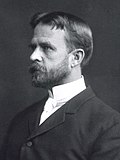 Thomas Hunt Morgan
Partners

Is this everyone?
Only relatives with a profile here are drawn, so a family can be larger than this. A line here can also be wrong.
Correct this familyAbout this person
Thomas Hunt Morgan earned his Ph.D. in zoology from Johns Hopkins in 1890 and spent his early years studying embryology at Bryn Mawr. After Mendelian inheritance was rediscovered in 1900, he turned to the fruit fly Drosophila melanogaster, setting up his Fly Room at Columbia's Schermerhorn Hall. There, through meticulous breeding experiments, he demonstrated that genes are carried on chromosomes and form the mechanical basis of heredity - founding modern genetics. Over his career he published 22 books and 370 scientific papers, and the fly became biology's workhorse. The Division of Biology he later built at Caltech went on to produce seven Nobel laureates.
Scientists from the United States 6


Fame.am measures public visibility signals. It does not measure human value, talent, morality, or credibility.