Paul Ricœur is read about 527 times a day, in 48 languages.
Counted to 16 September 2026, not since.
The middle day of the days counted, so one week of news cannot move it. The line under it is the last 60 days, one point a day.
Something wrong?He made the interpretation of texts a philosophical method - reading myths, scripture, Freud, and stories not as static meanings but as living acts of understanding that remake both reader and world.
A life in dates
Also in Deutsch
Photos 2


In their own words 2
 ,
, People do things, and then they imagine what they are doing in a kind of cloudy realm.
I dislike those who present myself as a Protestant philosopher; I am a philosopher and a Protestant.
Awards
About this person
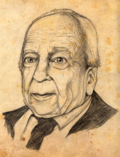
Jean Paul Gustave Ricœur was born on 27 February 1913 in France and trained in a philosophical lineage that included Martin Heidegger, Hans-Georg Gadamer, and Gabriel Marcel. He fused phenomenology - the close study of lived experience - with hermeneutics, the art of interpretation, and turned that hybrid toward places philosophy rarely went: mythology, biblical exegesis, psychoanalysis, metaphor, narrative. The method didn't just analyze texts; it treated interpretation itself as a creative, transformative act. In 2000 the Kyoto Prize in Arts and Philosophy recognized him for having "revolutionized the methods of hermeneutic phenomenology," pulling textual theory into domains both broad and concrete. He died on 20 May 2005, leaving a body of work that reframed how we think about meaning, story, and the self.



Fame.am measures public visibility signals. It does not measure human value, talent, morality, or credibility.