Neil deGrasse Tyson
American astrophysicist and science communicator · United States · Scientists · Born 1958 · age 68
Neil deGrasse Tyson is read about 3,176 times a day, in 67 languages.
A typical day, 30 days to 15 October 2026
The middle day of the days counted, so one week of news cannot move it. The line under it is the last 390 days, one point a day.
Something wrong?He made physics appointments on late-night TV and turned astrophysics into bestsellers people actually finish. Director of the Hayden Planetarium, host of the Cosmos reboot, and the guy who demoted Pluto - then spent years fielding angry mail about it.
A life in dates
Also in Deutsch
Photos 11


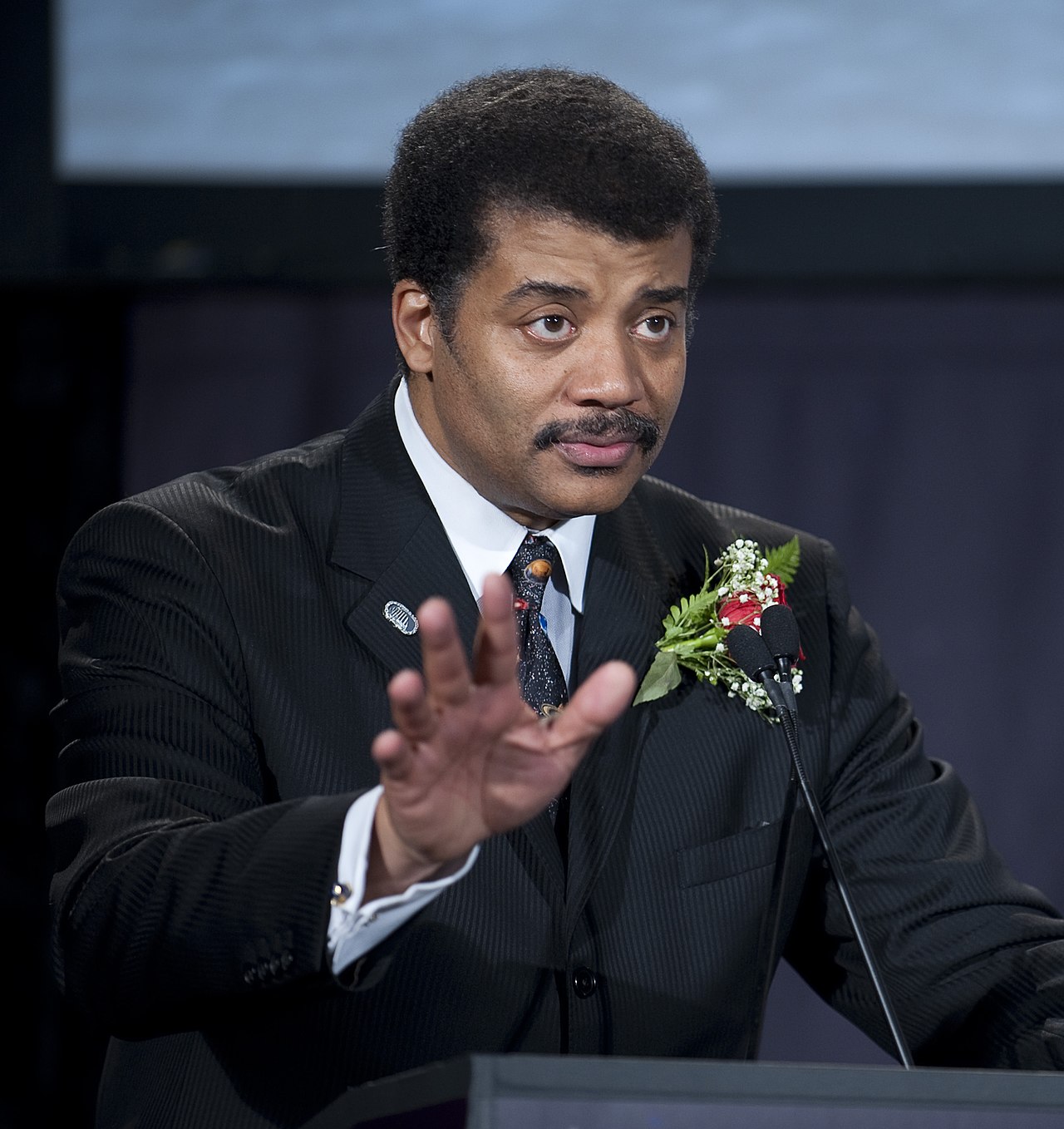 Tyson hosting the 40th anniversary celebration of Apollo 11 at the National Air and Space Museum in Washington, July 2009
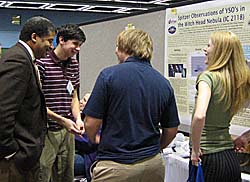 Tyson with students at the 2007 American Astronomical Society conference
 Tyson in December 2011 at a conference marking 1,000 days after the launch of the spacecraft Kepler
 Tyson promoting the Cosmos TV series in Australia for National Geographic, 2014
 Tyson in conversation with Richard Dawkins at Howard University, 2010
 Tyson, Bill Nye, and U.S. President Barack Obama take a selfie at the White House, 2014.
In their own words 10
 ,
, Knowing how things work is important, but I think that's an incomplete view of what science literacy is or, at least, should be. Science literacy is an outlook.
Creativity is seeing what everyone else sees, but then thinking a new thought that has never been thought before and expressing it somehow.
George Bush, within a week of this [the 9/11 attacks], gave us a speech, attempting to distinguish 'we' from 'they' … and how does he do it?....
Awards
Family
Parents
Neil deGrasse TysonPartners
Is this everyone?
Only relatives with a profile here are drawn, so a family can be larger than this. A line here can also be wrong.
Correct this familyAbout this person
Tyson studied at Harvard, the University of Texas at Austin, and Columbia before landing postdoc work at Princeton in 1991. Three years later he joined the Hayden Planetarium as a staff scientist, and by 1996 he was directing it - steering a $210 million reconstruction finished in 2000. He founded the American Museum of Natural History's Department of Astrophysics in 1997. For a decade starting in 1995, he wrote monthly essays for Natural History (later collected in Death by Black Hole and Astrophysics for People in a Hurry) and answered cosmic questions in StarDate under the pen name "Merlin." He served on two government space commissions and earned NASA's Distinguished Public Service Medal in 2004. Then came the screen work: NOVA ScienceNow from 2006 to 2011, the podcast StarTalk in 2009, and in 2014 the Carl Sagan torch-pass, Cosmos: A Spacetime Odyssey. The National Academy of Sciences gave him the Public Welfare Medal in 2015 for making the public care about stars again.
In common with Neil
 Lawrence M. KraussAlso in 400 Years of the Telescope (2009)
 Sofía VergaraAlso in This Is Me…Now (2024)
 Gary BuseyAlso in The Last Sharknado: It's About Time (2018)
 Nick OffermanAlso in Ice Age: Collision Course (2016)
 Scoot McNairyAlso in Batman v Superman: Dawn of Justice (2016)
 John MalkovichAlso in Zoolander 2 (2016)
Fame.am measures public visibility signals. It does not measure human value, talent, morality, or credibility.