Mel Brooks
American comedian, filmmaker, and actor (born 1926) · United States · Comedians
Mel Brooks is read about 6,074 times a day, in 69 languages.
A typical day, 30 days to 15 October 2026
The middle day of the days counted, so one week of news cannot move it. The line under it is the last 390 days, one point a day.
Something wrong?Nine decades in comedy, and the joke never lands the same way twice. Brooks turned farce into high art and low art into an EGOT, writing rooms into movie empires, and somehow made both Blazing Saddles and The Elephant Man.
A life in dates
Also in Deutsch
Photos 12
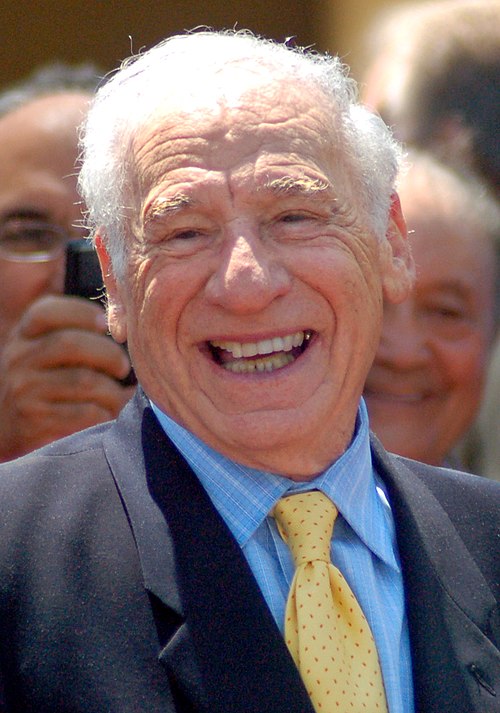
 Brooks, then known as Melvin Kaminsky, in the 1944 Eastern District High yearbook
 Brooks during World War II in Europe
 Brooks wrote for Your Show of Shows starring Imogene Coca and Sid Caesar
 Brooks collaborated with Carl Reiner on "The 2000 Year Old Man" albums
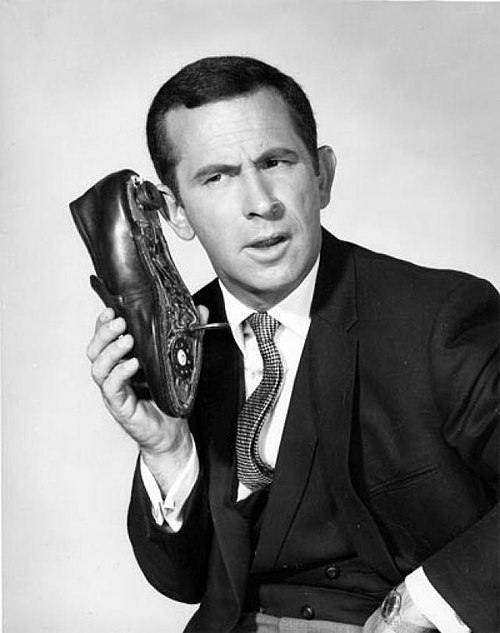 Don Adams with the iconic "Shoe Phone" in Get Smart
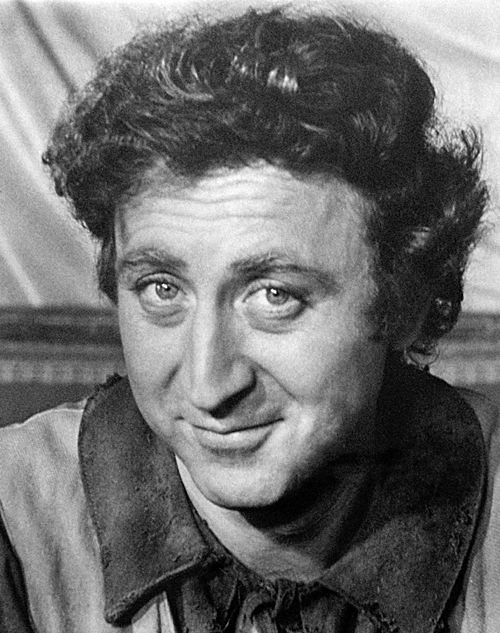 Brooks collaborated with Gene Wilder on several films including Young Frankenstein and Blazing Saddles, both in 1974
 Brooks in High Anxiety, 1977
In their own words 10
 ,
Comedy is a weird but very beautiful thing. Even though it seems foolish and silly and crazy, comedy has the most to say about the human condition.
Lady, it rose below vulgarity.
As long as the world is turning and spinning, we're gonna be dizzy and we're gonna make mistakes.
Listen
SpotifyOn YouTube
14.1K subscribersAwards
Family
Parents
Mel BrooksPartners


Is this everyone?
Only relatives with a profile here are drawn, so a family can be larger than this. A line here can also be wrong.
Correct this familyAbout this person
Brooks started as a writer for Sid Caesar's Your Show of Shows, working alongside Neil Simon and Carl Reiner. With Reiner he co-created The 2000 Year Old Man, winning a Grammy; with Buck Henry he invented Get Smart. His directorial debut, The Producers (1967), won him an Oscar for Best Original Screenplay. After The Twelve Chairs (1970) came the run that made him: Blazing Saddles and Young Frankenstein in 1974, then Silent Movie, High Anxiety, History of the World Part I, and Spaceballs. Through Brooksfilms he produced David Lynch's The Elephant Man, Cronenberg's The Fly, and 84 Charing Cross Road. He turned The Producers into a Broadway musical in 2001; it won 12 Tonys and ran six years. Married to Anne Bancroft from 1964 until her death in 2005, he hit one hundred in 2026 - the year the AFI moved Blazing Saddles to first on its list of the funniest films ever made.



Fame.am measures public visibility signals. It does not measure human value, talent, morality, or credibility.