Manuel L. Quezon
President of the Philippines from 1935 to 1944 · Philippines · Politicians · Lived 1878 to 1944 · aged 65
Manuel L. Quezon is read about 606 times a day, in 54 languages.
A typical day, 30 days to 7 October 2026
The middle day of the days counted, so one week of news cannot move it. The line under it is the last 382 days, one point a day.
Something wrong?The first Filipino to govern the entire Philippines as a unified state, he shaped the Commonwealth through land reform and military reorganization, then led a government in exile from Washington after the Japanese invasion forced him out in 1942.
Also in Deutsch
Photos 8
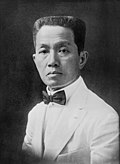
 Manuel L. Quezon (November 1942)
 Major Manuel Luis Quezon
 "Death to Quezon!" is heard in Manila ... the battle cry of the Radical party in a mass meeting of 1,000 persons in the Manila Opera House here. Manuel Quezon ... president of the Philippine LCCN2011647833
 0335jfPlaridel Masonic Temple Paco Manilafvf 21
 0335jfPlaridel Masonic Temple Paco Manilafvf 22
 1940 Philippine Cabinet meeting
 Quezon Roosevelt
 Aguinaldo and Quezon in 1935
In their own words 3
 ,
My loyalty to my party ends where my loyalty to my country begins.
The Latin American people believed and feel that we Filipinos form past of that vast family, the children of Spain.
As archived on Gov.ph (Accessed 2015)
Awards
Family
Manuel L. QuezonPartners

Children
Is this everyone?
Only relatives with a profile here are drawn, so a family can be larger than this. A line here can also be wrong.
Correct this familyAbout this person
Manuel Luis Quezon y Molina was a lawyer, soldier, and politician who defeated Emilio Aguinaldo in the 1935 presidential election to become the second president of the Philippines. During his presidency he tackled landless peasants, reorganized military defense, promoted settlement in Mindanao, and fought foreign control of Philippine commerce while opposing corruption. When World War II brought the threat of Japanese invasion, he established a government in exile in the United States. Scholars note he removed his own term limits and turned the Senate into an arm of the executive through constitutional amendments, consolidating what they call a "de facto dictatorship" and making him the first Filipino politician to integrate all levels of power into one system. He died in exile on 1 August 1944, and today both Quezon City and Quezon Province carry his name.
Politicians from the Philippines 6


Fame.am measures public visibility signals. It does not measure human value, talent, morality, or credibility.