Karl Barth
Swiss Protestant theologian (1886-1968) · Switzerland · Academics · Died at 82
Karl Barth is read about 605 times a day, in 64 languages.
A typical day, 30 days to 15 October 2026
The middle day of the days counted, so one week of news cannot move it. The line under it is the last 390 days, one point a day.
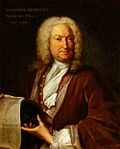
Something wrong?A Swiss Reformed theologian whose radical break from liberal Christianity hit hard enough to land him on the cover of Time in 1962. His unfinished Church Dogmatics and his role drafting the Barmen Declaration made him the defining theological voice of the twentieth century.
A life in dates
Also in Deutsch
Photos 8
 Karl Barth Bundesarchiv Bild
 Barthstube01
 Barthstube02
 Bundesarchiv Bild 194-1282-30A, Wuppertal, Evangelische Gesellschaft, Jahrestagung
 Bundesarchiv Bild 194-1283-23A, Wuppertal, Evangelische Gesellschaft, Jahrestagung
 DBP 1986 1282 Karl Barth
 Göttinger Gedenktafel, Barth, Karl, 1, Nikolausberger Weg 66, Oststadt, Göttingen, Landkreis Göttingen
 Karl Bart, Der Römerbrief
In their own words 10
 ,
Faith is never identical with "piety" even if it were the purest and finest.
Take your Bible and take your newspaper, and read both. But interpret newspapers from your Bible.
What expressions we used - in part taken over and in part newly invented!
Awards
Family

Is this everyone?
Only relatives with a profile here are drawn, so a family can be larger than this. A line here can also be wrong.
Correct this familyAbout this person
Karl Barth was born 10 May 1886 and trained in the liberal theology of Harnack and Schleiermacher. As a pastor in the rural Swiss town of Safenwil - where locals called him the "Red Pastor" - he grew disillusioned with the tradition he'd inherited. In 1919 he published the first edition of The Epistle to the Romans, resolving to read the New Testament differently. The 1921 second edition openly broke from liberal theology and brought him worldwide acclaim. He went on to author nearly all of the Barmen Declaration for the Confessing Church and began his multi-volume Church Dogmatics in 1932, a theological summa he would never finish before his death on 10 December 1968. His influence stretched from Bonhoeffer and Niebuhr to novelists like Flannery O'Connor and John Updike.
Academics from Switzerland 6


Fame.am measures public visibility signals. It does not measure human value, talent, morality, or credibility.