Johannes Fibiger is read about 60 times a day, in 57 languages.
A typical day, 30 days to 15 October 2026
The middle day of the days counted, so one week of news cannot move it. The line under it is the last 87 days, one point a day.
Something wrong?Johannes Fibiger won the 1926 Nobel Prize in Medicine for proving that a roundworm caused stomach cancer in rats - except it didn't. The tumours were vitamin A deficiency, the conclusion mistaken, and the prize later called "one of the biggest blunders" by the awarding institute itself.
A life in dates
Also in Deutsch
Photos 6


_Wellcome_M0014458.jpg?width=1200)


_-_btv1b531909194.jpg?width=1200)
Awards
Family
Parents

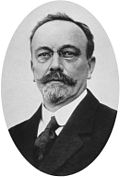 Johannes Fibiger
Is this everyone?
Only relatives with a profile here are drawn, so a family can be larger than this. A line here can also be wrong.
Correct this familyAbout this person
Fibiger, a Danish physician and professor of anatomical pathology at the University of Copenhagen, found roundworms in wild rats in 1907 and suspected they caused the stomach cancers he observed. By 1913 he reported he could experimentally induce cancer in healthy rats using the parasite - a claim hailed at the time as "the greatest contribution to experimental medicine." He was passed over for the 1926 Nobel alongside another researcher, then retrospectively awarded it alone the following year. After his death in 1928, independent work dismantled the finding: the roundworm Gongylonema neoplasticum couldn't cause cancer, and what Fibiger had seen were non-cancerous lesions triggered by vitamin deficiency. His diphtheria research, though, laid groundwork for the controlled clinical trial.


Fame.am measures public visibility signals. It does not measure human value, talent, morality, or credibility.