James Clerk Maxwell
Scottish physicist (1831-1879) · United Kingdom · Scientists · Died at 48
James Clerk Maxwell is read about 1,712 times a day, in 141 languages.
A typical day, 30 days to 18 October 2026
The middle day of the days counted, so one week of news cannot move it. The line under it is the last 393 days, one point a day.
Something wrong?He showed that electricity, magnetism, and light are three faces of the same thing - the second great unification in physics after Newton - and in doing so predicted radio waves before anyone could build them.
A life in dates
Also in Deutsch
Photos 8


In their own words 10
 ,
, Mathematicians may flatter themselves that they possess new ideas which mere human language is yet unable to express.
We shall see that the mathematical treatment of the subject [of electricity] has been greatly developed by writers who express themselves in terms of the 'Two Fluids' theory.
He that would enjoy life and act with freedom must have the work of the day continually before his eyes.
Awards
Family
Parents

 James Clerk Maxwell
Partners

Is this everyone?
Only relatives with a profile here are drawn, so a family can be larger than this. A line here can also be wrong.
Correct this familyAbout this person
James Clerk Maxwell graduated from Trinity College, Cambridge, in 1854 with distinction in mathematics and the Smith's Prize, then briefly stayed to work on optics and colour theory. He held the Chair of Natural Philosophy at Marischal College in Aberdeen, where he solved the structure of Saturn's rings - correctly proposing they were countless small particles - and won the Adams Prize in 1859. From 1860 to 1865, as Professor of Natural Philosophy at King's College London, he developed his theory of electromagnetic fields, publishing "A Dynamical Theory of the Electromagnetic Field" in 1865 to show that electric and magnetic fields travel through space as waves at the speed of light. He also derived the Maxwell-Boltzmann distribution for kinetic theory of gases, presented the first durable colour photograph in 1861, recognized chaos and the butterfly effect, and introduced Maxwell's demon in 1867 to probe entropy and information. In 1871 he returned to Cambridge as the first Cavendish Professor of Physics, overseeing construction of the Cavendish Laboratory until his death in 1879 at forty-eight.
In common with James
 Stephen HawkingBoth received Adams Prize
 James WattBoth received Scottish Engineering Hall of Fame
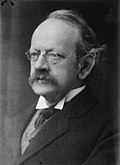 J. J. ThomsonBoth received Adams Prize
 Thomas TelfordBoth received Scottish Engineering Hall of Fame
 Subrahmanyan ChandrasekharBoth received Adams Prize
 John RennieBoth received Scottish Engineering Hall of Fame
Fame.am measures public visibility signals. It does not measure human value, talent, morality, or credibility.