Hans Adolf Krebs is read about 165 times a day, in 65 languages.
A typical day, 30 days to 15 October 2026
The middle day of the days counted, so one week of news cannot move it. The line under it is the last 390 days, one point a day.
Something wrong?He mapped the hidden chemical loops that turn a meal into motion - the cycles inside nearly every living cell that extract energy from food and oxygen. The Nobel came in 1953, but the Krebs cycle had already rewritten the textbook.
A life in dates
Also in Deutsch
Photos 8
 Hans Adolf Krebs
 13. Tagung 1963 Medizin; Gruppen beim Bayrischen Frühstück Sir Hans A. Krebs - W134Nr.073053b - Willy Pragher
 13. Tagung 1963 Medizin; Gruppen beim Bayrischen Frühstück- Sir Hans A. Krebs - LABW - Staatsarchiv Freiburg W 134 Nr. 073053a
 13. Tagung 1963 Medizin; Gruppen beim Bayrischen Frühstück- Sir Hans A. Krebs - LABW - Staatsarchiv Freiburg W 134 Nr. 073053b
 16. Tagung 1966 Mediziner; Beim Bayrischen Frühstück- Sir Hans A.Krebs, Sir John C. Eccles, Severo Ochoa - LABW - Staatsarchiv Freiburg W 134 Nr. 080778b
 25. Jubiläumstagung 1975 Medizin- Sir Hans A. Krebs, Julius Axelrod, Severa Ochoa, rechts- Carl F. Cori - LABW - Staatsarchiv Freiburg W 134 Nr. 103670b
 25. Jubiläumstagung 1975 Medizin; Bayrisches Frühstück- Sir Hans A. Krebs mit Bier - LABW - Staatsarchiv Freiburg W 134 Nr. 103685
 25. Jubiläumstagung 1975 Medizin; Maikäferrede- Gräfin Sonja Bernadotte übergibt Maikäfer an Alfred D. Hershey, dahinter Sir John C. Eccles, Gerald Ed - LABW - Staatsarchiv Freiburg W 134 Nr. 103708r
Awards
In their orbit
 Child: John Krebs, Baron Krebs
About this person
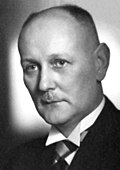
Hans Adolf Krebs was born in Germany on 25 August 1900 and trained as a physician and biochemist before the war pushed him to Britain. He spent years tracing how cells metabolize nutrients, first cracking the urea cycle - the body's way of disposing nitrogen waste - then the citric acid cycle, the central engine of cellular respiration that allows oxygen-breathing organisms to harvest vastly more energy than fermentation ever could. That second discovery, often called the Krebs cycle, earned him the Nobel Prize in Physiology or Medicine in 1953. Later, working with Hans Kornberg, he identified the glyoxylate cycle, a variant pathway in plants and microbes. He spent his final academic years at Oxford, retiring in 1967 and dying there in 1981.




Fame.am measures public visibility signals. It does not measure human value, talent, morality, or credibility.