George Washington Carver
African American botanist and inventor (1864-1943) · United States · Scientists · Died at 79
George Washington Carver is read about 1,321 times a day, in 57 languages.
A typical day, 30 days to 7 October 2026
The middle day of the days counted, so one week of news cannot move it. The line under it is the last 382 days, one point a day.
Something wrong?He turned the peanut into a symbol of self-sufficiency and soil science into a quiet revolution for Southern farmers too poor to keep planting cotton into dust.
A life in dates
Also in Deutsch
Photos 8
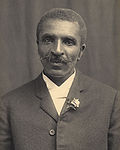
 George Washington Carver c1910
 "Build for the future" - NARA - 513986
 20111110-OC-AMW-0024 - Flickr - USDAgov
 AUSTIN CURTIS - SCIENTIST SUCCESSOR TO DR. CARVER - NARA - 535696
 Betsy Graves Reyneau and Thomas L. Griffith
 CARVER COURT, CALN TWP, NORTHERN CHESTER COUNTY, PA
 Carver1web
 George W Carver - NARA - 559197
In their own words 6
 ,
The virgin fertility of our soils and the vast amount of unskilled labor have been more of a curse than a blessing to agriculture.
Our creator is the same and never changes despite the names given Him by people here and in all parts of the world.
I know that my Redeemer lives. Thank God I love humanity, complexion doesn't interest me one single a bit.
Awards
About this person
Born into slavery around 1864, Carver earned a master's degree and joined Tuskegee Institute as a professor, where he attacked the South's cotton monoculture problem with a farmer's practicality. He taught crop rotation - peanuts, sweet potatoes, anything but cotton - and published over forty bulletins packed with recipes and techniques for working depleted land without money. The Experiment Station under his direction became a lifeline for struggling farmers, black and white. His environmental advocacy and agricultural ingenuity earned him the NAACP's Spingarn Medal and, rare for the era, widespread respect across the color line. Time called him a "Black Leonardo" in 1941, two years before his death.
Scientists from the United States 6


Fame.am measures public visibility signals. It does not measure human value, talent, morality, or credibility.